Always Providing You With Ongoing Information

Archive for the ‘email’ Category

Yahoo Launches Website So You May Be Eligible For A Claim

Snapshot35_001

As USAToday reports, Yahoo has launched the website www.yahoodatabreachsettlement.com, where someone can go to make a claim. In order to be eligible for a claim, you need to have met the following requirements:

  • You had a Yahoo account between January 1, 2012, and December 31, 2016.
  • Here a “Yahoo account” means you had a Yahoo email, or you had a login at one of Yahoo’s sites, including Yahoo Finance, Yahoo Fantasy Sports, Flickr, or Tumblr.

Gmail Adding More Functionality To Its Right-Click Menu

snapshot41_020

Users can expect to see this by February 23 2019.

Gmail’s Newest Features

Snapshotskirt4_001

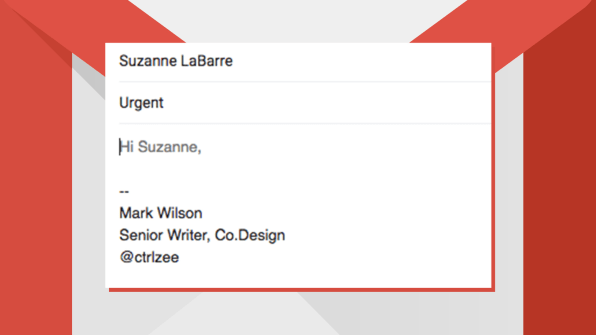
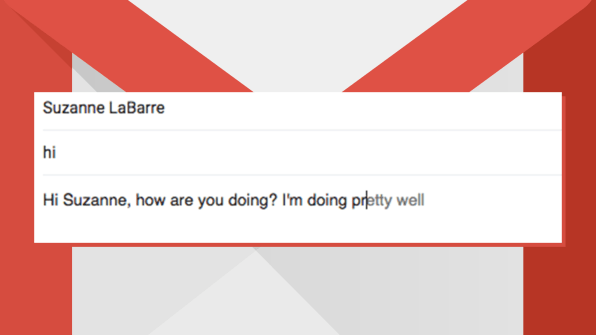
Google launched a new feature called Smart Compose that takes its AI writing much further. Smart Compose works a lot like Google’s own Autocomplete does in Search, popping up the things you might be about to say next. Simply by hitting tab, you can accept Google’s proposed words, add them to your copy, and move on to the next line of your email . . . for which Google might have even more suggestions.

To try it out, you’ll first need to turn on the “Enable experimental access” option within the General tab of the new Gmail’s settings. After you click the “Save Changes” button at the bottom of the screen, Gmail will refresh itself—and Smart Compose should then automatically be activated. You can confirm by going back into the General tab of the settings and looking for the newly added Smart Compose option. As long as “Writing suggestions on” is checked, you’re all set—and you should see Google’s predictive text show up periodically as you write new emails.

Google is very good at saying “hi”

[Source Image: Google]

Google is ready to schedule . . . perhaps to a fault

[Source Image: Google]

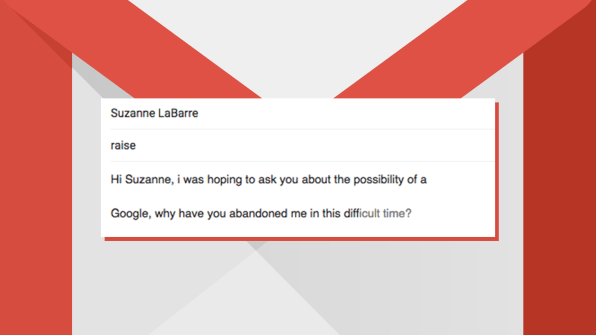
Google doesn’t seem interested in helping on serious topics

[Source Image: Google]
Click here for further assistance

Operation Wire Wire

Snapshotskirt4_001

 Department of Justice and the FBI—has announced a major coordinated law enforcement effort to disrupt international business e-mail compromise (BEC) schemes that are designed to intercept and hijack wire transfers from businesses and individuals.

Click here

Google Drive Has Been Updated To Look Like The New Gmail

cand29_001

Google has given Drive a surprise update with elements that make it look more like the new Gmail. The redesign doesn’t come with new features, but when you get it, you’ll notice that The Big G has changed the Drive interface background from gray to white for a cleaner look. Its boxes and icons now also have much rounded corners and look a bit taller than before, and Drive’s logo now has a more prominent place on the top left corner of the interface. You’ll also find that Google has shuffled Drive’s icons around, with the Settings and Help Center icons now in the same line as the search bar. . You’ll also find that Google has shuffled Drive’s icons around, with the Settings and Help Center icons now in the same line as the search bar.


GMAIL Has A New Look

Snapshotfishnet8

Click On Gear icon top right to enable the new Gmail.

Google has not made this new Gmail default for everyone yet, so if you’re not seeing it, keep checking back. The rollout is supposed to be global for all 1.4 billion Gmail users.

Google Planning Self destructing eMail On Gmail

Snapshotmensuit11_001

The new Gmail design is reportedly due to launch at the I/O conference in May 2018. One of the new and much-talked features is the Confidential Mode that is reportedly debuting with the new Gmail. The Confidential Mode will offer functionalities that will disallow the recipient from performing the restricted actions on the email.

 The new feature called Confidential Mode for the Gmail that would let the email sender choose if the recipient can forward the email, copy or paste the email contents, download or print the email, or even flag the email with self-destruct option. While the recipient will lose his control on what he or she can do with the email sent in the Confidential Mode, the self-destruct feature will remove the email discreetly from the recipient’s Inbox.

Screenshots show that a sender can schedule an email to self-destruct for a particular time and date, after which the email would either be unreadable or vanish completely. In order to activate the Confidential Mode, the sender needs to tap on the lock icon in the Compose email pop-up box. In addition to scheduling the email for self-destructing, you can even assign a password to the email, so that the recipient, on getting the email, is required to enter the password to open it. As the name suggests, this email feature is for confidential emails that want the negligible attention of others.

Gmail New Design Coming Soon

Snapshotfishnet3_001

Those new features, in short, include:

  • A fresh, clean look for Gmail on the web.
  • Easy access to G Suite apps, such as Google Calendar, from within Gmail.
  • Smart Reply on the web, just like on mobile.
  • Ability to “snooze” emails and choose when they reappear in your inbox.
  • Offline support (native offline support in the new Gmail experience by June 2018)

Voters Consumed With Political Spam Messages

Snapshotleather3_002

Several campaigns have taken to aggressive, last-minute tactics — like blasting their constituency districts with spammy text messages.

ZDNet has seen reports and tweets of screenshots of text messages from several New York-based candidates in the past few days, pushing local residents to vote for a particular candidate or calling for campaign donations.


That drew ire from one local resident, who said the unsolicited message could influence how they would vote Tuesday.

For years, state and federal election candidates have used text messages as a way to solicit votes or contributions from their constituents. Use of text messaging first rocketed during the 2008 presidential campaign and has only escalated in size and scale — no more so than during last year’s election.

But the law is clear: it’s illegal for companies to send text messages to individuals who haven’t given prior consent.

Craig Engle, an attorney at Washington DC.-based law firm Arent Fox, said that the Telephone Consumer Protection Act protects consumers from receiving unsolicited political calls and texts to cell phones unless the sender has obtained prior consent.

But there’s a catch: political emails and text messages are considered non-commercial and are exempt from the law.

After all, these campaigns aren’t trying to sell you anything — they just want you to donate or vote for them.

But questions remain over how residents’ phone numbers are obtained by campaigns.

A Brisport campaign spokesperson told ZDNet that the phone numbers used to send two separate text messages by the campaign were obtained from New York’s Board of Elections.


One former senior staffer for a presidential candidate’s campaign (who did not want to be named for the story) told ZDNet that phone numbers are often traded — bought and sold — like a commodity.

Lists of long-codes of people’s phone numbers, of people who’ve opted into text messages, can be purchased. Anyone could buy a list that’s legally opted-in and send a message.

People almost never read the terms of service. “When you signed in to some social app or when you shared your phone number with your bank, any of those folks could’ve sold on your information,” the person said. “But it doesn’t mean that people remember.”

And as frustrating as unsolicited text messages are, political campaigns tend to stay within the lines of the law — even if they have to be reminded of the rules from time to time.

“Campaigns are very risk averse in pushing those boundaries because they don’t want to get caught or kicked off the ballot, so they won’t do something too sketchy,” the person said.

Engle said that the best action to take is to simply respond to unsolicited text messages with “STOP.”

“That, in theory, should take you off the list,” he said. “If that doesn’t work, a complaint could be filed with the FTC.”

Political campaigns are in no hurry to stop using text messages in their campaigns. President Obama’s successful 2008 campaign set the gold standard for using text messages in his winning campaign, a departure from John McCain’s use of robocalls.

Text message blasts could help voters remember a candidate’s name in the voting booth, but is a pesky spammer really the best person for the job?

Andrew Carnegie & His Libraries

cand3_001

Andrew Carngie libraries brought a world of books to many towns and opened a broader world to those who read.

When Andrew began thinking of what to do with the vast wealth he had accumulated, his thoughts turned to the libraries that had given him his self-education and helped make him the man he became. He decided that to give that same opportunities to others was the best use of his money.

He began by funding libraries in the two locations he had grown up in: Dunfermline, Scotland, and the Allegheny/Pittsburgh area in Pennsylvania. The first of the Carnegie libraries was the one in Dunfermline and it opened in 1883.

The first library he commissioned in the U.S. was at Allegheny, Pennsylvania. The grand opening was in 1890, but although it was the first one he commissioned, a second one in Braddock, Pennsylvania, was the first to open in the states in 1889.

In 1892, he granted the funds for a library in Fairfield, Iowa, the first outside Pennsylvania.

By 1899, his Carnegie Libraries were springing up across the nation.

Because of segregation, black people were not allowed to use libraries, so Andrew also funded libraries strictly for them. He founded Colored Carnegie Libraries in Houston, Texas, and Savannah, Georgia, among other cities.


Andrew set up his library grants so that small towns could receive $10,000 to build a library, which was a substantial amount in those days. In order to receive that grant, the town’s elected officials had to demonstrate the need for a public library, provide the building site, pay to staff and maintain the library by committing public funds for that purpose in the amount of 10 percent of the construction cost per year and to provide free access to its patrons.

When Andrew began funding library construction, the policy of existing U.S. libraries was to operate with “closed stacks,” which meant that patrons requested a book from a staff member and that person would bring the book from the off-limit shelves of books. No browsing allowed.


The first five libraries he funded operated in this fashion, but Andrew soon realized this required more staff, so he came up with an “open stacks” form of operation where patrons could browse the collection of the library and decide which books they wanted to check out. He was then able to have the libraries he funded designed so that just one librarian could staff the library.

This new policy caught on quickly and soon most other public libraries were adopting this form of operating system.

In Missouri, the earliest Carnegie Library was built in 1899 and the last one in 1921. His donations for the 35 Carnegie Libraries in Missouri totaled over $1.5 million during that 22-year period.

The Carnegie Library at Bolivar was constructed in 1915 with a grant from Andrew for $8,000. It was the first public library in Bolivar and remained a public library until 2000. The building now serves as the home of the Polk County Genealogical Society.

The Carnegie Library at Marshfield is claimed to be the one granted by Andrew to the smallest community west of the Mississippi to receive such a grant. It was constructed in 1911 with that $5,000 grant and operated as a public library until 1995. It now houses the Webster County Historical Museum.


At the turn of the last century, Springfield residents began negotiating with Andrew Carnegie to acquire funds for a library and he granted them $50,000.

They then raised $3,250 to purchase the site for the library and it was constructed and then opened in March of 1905. At the time it opened, Springfield’s Carnegie Library housed 700 books. That building still serves as a library today and is part of the Springfield/Greene County Library System.

By the time Andrew Carnegie died on Aug. 11, 1919, he had given away over $350 million, which would equate to over $80 billion in today’s dollars.


Moreover, he endowed the Peabody Institute in Baltimore, founded the Carnegie Institute of Technology in Pittsburgh, the Carnegie Institution in Washington, D.C., and the Carnegie Trust for the Universities of Scotland, the Carnegie United Kingdom Trust.

He contributed a substantial amount of money to construct the Hooker Telescope at Mount Wilson in 1911 to study the planets and stars. He built and owned the famous Carnegie Hall in New York City. He was one of the contributors to Booker T. Washington’s Tuskegee Institute, and help Washington found the National Negro Business League.

Andrew also started the Carnegie Hero Fund for the United States and Canada to recognize deeds of heroism. In 1903, he contributed $1.5 million to build the Peace Palace at The Hague and in 1914 he founded the Church Peace Union comprised of world leaders in politics, academia and religion in the hopes of heading off World War I.

There are two towns in the U.S., one in Pennsylvania and one in Oklahoma that bear his last name.

Google Has Launched In Cuba

Google Credit: Magdalena Petrova

Google servers are now in Cuba and the internet is up and running.

The computers are part of Google’s global network of caching servers, which store frequently requested content locally so it doesn’t have to be accessed over long distances.That speeds up access in any country but is particularly important in a nation like Cuba, which has relatively low connectivity to the rest of the world.Cuba is connected to the rest of the internet almost exclusively via the ALBA-1 submarine cable, which runs from the island to Venezuela. Currently surfing the internet is still very pricey in Cuba. Government-run internet cafes charge several euros for an hour or two of online time — a large amount in a country where the average wage is about 20 euros (US$22) per month.


Phishing Attacks Targeting Gmail Customers

Snapshotpinktop4_001

A phishing technique targeting Gmail and other services has been gaining popularity during the past year among attackers. Over the past few weeks there have been reports of experienced technical users being hit by this.

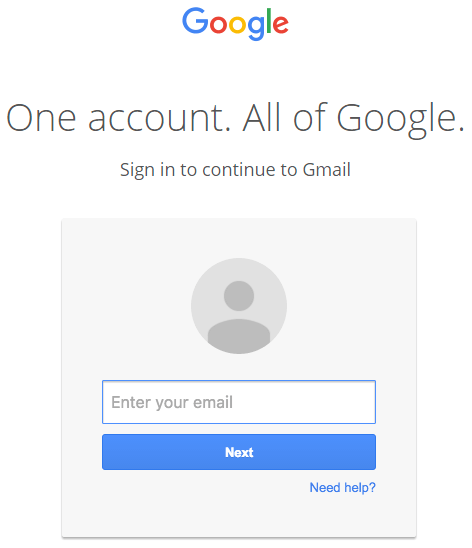
This attack is currently being used to target Gmail customers and is also targeting other services.The attacker will send an email to your Gmail account. That email may come from someone you know who has had their account hacked using this technique. It may also include something that looks like an image of an attachment you recognize from the sender.You click on the image, expecting Gmail to give you a preview of the attachment. Instead, a new tab opens up and you are prompted by Gmail to sign in again. You glance at the location bar and you see accounts.google.com in there. It looks like this….

You go ahead and sign in on a fully functional sign-in page that looks like this:

GMail data URI phishing sign-in page

Your account has been compromised once you complete sign-in.

Google Has Been Told To Hand Over Their Foriegn Emails

careersuit7_001


For Those out there with the luxury of privacy, well Google has been told to hand over  emails stored outside the country in order to comply with an FBI search warrant.  U.S. Magistrate Judge Thomas Rueter ruled on Friday that the act of transferring emails from a foreign server did not qualify as a seizure.

The judge ruled there is no “meaningful interference” with the account holder’s “possessory interest”, going on to assert that any privacy infringement occurs “at the time of disclosure in the United States”, rather than when the data itself is transferred.

Rule 41

They Say It Was Weiner’s (Laptop)Metadata

gold7_001


  • FBI officials knew in early October that Anthony Weiner’s laptop contained emails that were sent to or received from Hillary Clinton’s secret server 
  • However, agency head James Comey wasn’t informed of this development until Thursday, writing a letter to congress Friday that the emails existed
  • Republicans, including Donald Trump, pounced on this news suggesting the FBI must have found a smoking gun in the new email trove 
  • Democrats have pushed back suggesting it was inappropriate for Comey to write to congress without knowing what the messages contained 
  • Senate Minority Leader Harry Reid today said he believed Comey may have violated the Hatch Act 
  • What the FBI officials used to make their determination that Clinton emails were on the laptop was the metadata 

Read About It here

More Here

Yahoo Admitted 500 MillionAccounts Hacked: However, This Is News To Verizon

gold6_001

Yahoo admitted that back in 2014 there was a theft of 500 million accounts. However, Verizon who recently acquired Yahoo in July for $4.83 billion has not finalized the acquisition and says this is news to them, they’re just learning about this.

Hacker Named “Peace” Selling Yahoo Accounts

Snapshotpurple_001

The hacking of yahoo account certainly comes at a bad time when Yahoo is in the process of selling its company to the mega giant Verizon. The hack,  became known in August when an infamous cybercriminal named “Peace” said on a website that he was selling credentials of 200 million Yahoo users from 2012 on the dark web for just over $1,800. The data allegedly included user names, easily decrypted passwords, personal information like birth dates and other email addresses.

Democrat GOP Concerned Over Weekend Hacking

gold8_001

The ongoing hacking and leaking of emails and other electronic records from Democratic Party organizations’ servers had operatives in both parties concerned that an “October surprise” or other consequence of the cyber crimes could throw more curveballs into an already tumultuous presidential campaign season.

Nancy Pelosi, Minority House Leader sent a letter to congressional Democrats over the weekend after a hacker called Guccifer 2.0 posted personal and work email and phone numbers of Democratic staffers online. Pelosi called the ­cyber theft “an electronic Watergate break-in,” says she has received lewd voicemails and text messages before she changed her cell phone number.

The FBI has launched an investigation for the breach of Democratic servers.

Notorious Hacker Claims He Has Yahoo Accounts For Sale

dress2_001

The notorious black hat says he has more than 200 million hacked Yahoo accounts for sale on the dark Web. Yahoo is refusing to comment on its veracity. Yahoo accounts are primarily used to log into the company’s webmail service, but also for other sites like Flickr. It is uncertain  at this point whether Yahoo has itself been breached, but the account data has been publicly available on a Tor-accessible marketplace called The Real Deal since Monday, and is apparently being sold by a hacker known as Peace, who has previously been linked to large-scale sales of MySpace and LinkedIn account details in 2012.

The entire dump, which apparently contains usernames, hashed passwords created with the md5 algorithm, dates of birth, and occasional backup email addresses, can be bought for three bitcoins (roughly £1,360 or $1,813).

Yahoo recommends creating stronger passwords

Hacking Group Anonymous Declares War On Trump

Snapshot_111

The “hacktivist” group  Anonymous has declared “total war” against Donald Trump.

Here’s what they said. “Dear Donald Trump, we have been watching you for a long time and what we see is deeply disturbing,” a masked Anonymous member begins in the recording. “Your inconsistent and hateful campaign has not only shocked the United States of America, you have shocked the entire planet with your appalling actions and ideas.”

Anonymous says it has a detailed plan for taking down The Donald. On April 1, for example, the group plans to take down the website for Trump International Hotel & Tower. The collective also plans to destroy his brand by unearthing dirt that discredits his image. Already, the group has hacked Trump’s voicemail and leaked the messages


Google & Unencrypted Emails

business suit2_001

Google has a pair of new security features that will warn users when they should be cautious about revealing sensitive information over email.

Users will be shown a small red unlocked padlock icon in the upper right-hand corner of a message to let them know that someone they’re sending messages to or receiving email from doesn’t support TLS encryption that would keep information from prying eyes in transit. The majority of email that users see on a regular basis likely won’t contain one of these warnings, as most major email providers like Microsoft and Yahoo already support TLS encryption.


Bombarded With Linkedin Emails?

beigesuit3_001

LinkedIn says users are receiving too many emails from the professional social network. The company is taking steps to reduce the number of emails sent and outlined two actions already being implemented.

Read More  In a blog post,

Gmail’s Undo Send Feature


Snapshotpingreen9_001Snapshotpingreen8_001

Gmail has a undo sent mail feature

Gmail’s Undo Send Instructions Here

How To Tell If Someone’s Been Snooping On Your Email Account

Snapshothalter7_001

Let’s take GMAIL for example. Log into your Gmail account from your computer’s Web browser. Once you get to your inbox screen, scroll to the bottom, and look for the link labelled “Details” in the lower-right corner. (Look closely)   Click the link, and you’ll get a pop-up window that shows the last 10 times someone accessed your Gmail account, along with how they accessed it (through a browser, an email app, and so on), their IP address, and when they access it. If something looks strange, you’ll want to change your password as soon as possible.

Keyloggers Are At The Hotel Business Centers

business suit4_001


The Hospitality business that thieves are installing keyloggers on hotel PCs to steal guests’ data. In a recent Dallas area bust, authorities caught multiple people swiping account logins, banking info and other personal details from travelers typing away at compromised business center systems.

The Secret Service recommends that hotels  give guests limited PC accounts that prevent them from installing apps. the best solution is to BYOD

The Internet Of Things: A New & Upcoming Trend

According to industry research firm IDC, the IoT market is expected to hit $7.1 trillion by 2020,” said John Maddison, vice president of marketing at Fortinet.

Completed in June 2014, the survey asked 1,801 tech-savvy homeowners questions relating to the Internet of Things as it pertains to the connected home. These were the top findings:

The Connected Home is a reality – A majority (61 percent) of all respondents believe that the connected home (a home in which household appliances and home electronics are seamlessly connected to the Internet) is “extremely likely” to become a reality in the next five years. China led the world in this category with more than 84 percent affirming support.

  • In the U.S., 61 percent said that the connected home is extremely likely to happen in the next five years.

Homeowners are concerned about data breaches – A majority of all respondents voiced their concern that a connected appliance could result in a data breach or exposure of sensitive, personal information. Globally, 69 percent said that they were either “extremely concerned” or “somewhat concerned” about this issue.

  • Sixty-eight percent of U.S. respondents said that they were “extremely concerned” or “somewhat concerned.”

Privacy and trust are concerns – When asked about the privacy of collected data, a majority of global respondents stated, “privacy is important to me, and I do not trust how this type of data may be used.” India led the world with this response at 63 percent.

  • Fifty-seven percent in the U.S. agreed with this statement.
  • Data privacy is an extremely sensitive issue – Respondents were also asked how they would feel if a connected home device was secretly or anonymously collecting information about them and sharing it with others. Most (62 percent) answered “completely violated and extremely angry to the point where I would take action.” The strongest responses came from South Africa, Malaysia and the United States.

Libraries Lending WiFi Hotspots


Snapshotnavy8_001


The digital divide widens when you look at race, age, income and especially education level. Only 37 percent of non-high school graduates have broadband, compared to 57 percent of high school graduates, 78 percent of those with “some college” and 89 percent of those with a higher degree.

Out of 148 countries, the United States ranked 35th for Internet bandwidth capacity. Broadband Internet in the United States is, on average, slower but still more expensive than in other countries. Riga, the capital of Latvia, has an average Internet speed two-and-a-half times faster than the one in San Antonio, TX, and yet their service is only a quarter of the cost.  Two plans to begin lending portable WiFi hotspots to underserved communities were among the winning projects of the Knight News Challenge to strengthen the Internet for free expression and innovation. Although the Chicago Public Library and New York Public Library initiatives are unique, however their goal to expand internet access and promote digital literacy are the same. Since the target demographic for these projects are underserved, often poor communities, the libraries will have to be careful to not infringe on users’ privacy or digital freedoms in order to demonstrate the success of the projects.  New York Public Library and Chicago Public Library  want to see users from underserved communities become more comfortable using digital technology. Their longterm goal is to see an increase in broadband adoption rates in the communities they serve and to begin eliminating the countrywide digital divide

The digital divide in New York City is even higher than the national average, Currently, anyone with a library card can use a desktop or laptop computer at one of the 92 branches for up to 45 minutes. The NYPL website suggests making an advance reservation up to one day in advance (through, of course, an online reservation system). The Chicago Public Library,  provide a third of the free computer and Internet access in the city, and the largest provider. Anyone with a library card (or an ID proving they don’t live in Chicago) can get on a computer for up to two hour-long sessions per day, 8 hours a day, 6 days a week. (They also have an online reservation system, although the website states computers can be reserved in person as well.)

The proposed plan in Chicago would provide members of underserved communities in three locations access to both portable WiFi and laptop computers for up to three weeks. During the course of the two year pilot, 300 – 500 WiFi hotspots would be made available in several library locations in areas with less than 50 percent broadband adoption rates. In both New York and Chicago, the hotspot lending program will be accompanied by digital literacy and Internet safety classes.

The pilot programs will be judged based on exit interviews conducted with participants. The libraries want to ensure that borrowers become increasingly comfortable with digital technology and if home Internet access changes their attitudes towards technology. They will also probe whether borrowers are aware of or interested in free or low cost broadband Internet programs.

Chicago Public Library will also collect and analyze circulation data to understand demand and use. The NYPL plans they to look at the broad categories of Internet use such as social media, education, entertainment, commerce, search and utility. NYPL is in talks with other New York City library systems (Brooklyn & Queens) as well as Maine and Kansas (rural areas)

More Info 

Google Glass Go On Sale Next Week

Snapshot_112

Google Inc will take online orders for its Glass wearable gadget on April 15, with the asking price of $1500 in the U.S.

For a limited time starting Tuesday, Google will make the wearable device available to more than just the select group of users such as apps developers in its Glass Explorer program.

In a blogpost, Google that the quantity would be limited. Tuesday, April 15th, They will be trying their latest and biggest Explorer Program expansion experiment to date. Anyone in the U.S. will be able to become an Explorer by purchasing Glass.

Many tech pundits expect wearable devices to go mainstream this year, extending smartphone and tablet capabilities to gadgets worn on the body, from watches to headsets. Google has run campaigns in the past to drum up public involvement, including inviting people to tweet under the hashtag #ifihadglass for a chance to buy a pair of the glasses.

Google Glass has raised privacy concerns, prompting some legislators to propose bans on the gadget

Facebook Purchases WhatsAPP


business suit3_001


The world’s largest social networking conglomerate said Wednesday that it is paying $12 billion in Facebook stock and $4 billion in cash for WhatsApp. In addition, the app’s founders and employees — 55 in all — will be granted restricted stock worth $3 billion that will vest over four years after the deal closes. It was mentioned that Facebook  likely prizes WhatsApp for its audience of teenagers and young adults who are increasingly using the service to engage in online conversations outside of Facebook, which has evolved into a more mainstream hangout inhabited by their parents, grandparents and even their bosses at work. Facebook said it is keeping WhatsApp as a separate service, just as it did with Instagram, which it bought for about $715.3 million nearly two years ago.  The app is currently adding a million new users a day


More Here

WhatsAPP

New Mobile App Can Tell If You’re Lying

Snapshottahoe3_001

A new mobile app developed at Stevens tells you, in an instant, who’s telling the truth. 

Jaasuz, an app invented by two faculty members and perfected with the assistance of their graduate students, appeared on Apple’s iTunes “app store” after three years of development. It may be the first-ever iOS application detect the truth or a lie.

The app reads text and quickly sifts through it for dozens of different clues about truth (or intent to deceive), as well as gender, drawing on historical patterns extracted from hundreds of confirmed online hoaxes and half a million known-gender emails. Potential applications for the fraud-detecting technology might include uses in the insurance, law enforcement, cybersecurity and legal professions, among others.

Other lie detector apps can be found on Google play

Tech Conglomerates Lobby Washington

Snapshotleatherpurple4_001

Ten of the largest technology companies in the US spent more than $61 million lobbying Washington in 2013, according to an analysis of records filed by Consumer Watchdog. Apple, Google, Microsoft, and Facebook, used the money in attempts to guide the government’s hand on issues such as privacy, data security, and advertising.

The $61 million used for lobbying between the ten companies is an increase of 16 percent since 2012, in which they spent a collective $52.78 million. 2013’s biggest spender remained Google, but the $14.06 million the search giant put towards Washington was actually a decrease in outlay of 14.7 percent from the previous year, when it was the target of an antitrust investigation. The firm’s lobbying costs looked to be trending upwards at the end of 2013: after a decrease in relative third quarter spending, Google’s fourth quarter expenses rose from $3.35 million to $3.98 million.  In November, the Facebook CEO took his political advocacy to ABC’s This Week, discussing NSA surveillance and directly criticizing the government’s Healthcare.gov.

Young Ones March For Their Own Library

Snapshot_143

“Books, access fairness, we’re marching to raise awareness,” the more than 50 second-graders declared as they marched from the Chinatown gate to City Hall Friday afternoon.

“We want justice. We want it now!” they chanted. 

Read More

America Library association Tackles NSA Reform

Snapshot_034

 The American Library Association(ALA) is tackling  NSA reform, due to concerns that the agency’s meta-data collection will infringe on the freedom to read and conduct research.

Alan Inouye, director of the Office for Information Technology Policy at ALA, told The Hill “Libraries are all about meta-data,” As a library user, “you need to have some freedom to learn about what you think is important without worrying about whether it ends up in some FBI file. We’re talking about the information patterns of people. If that’s not personal, I don’t know what is.”

 Since the passing of the Patriot Act (pdf) in the aftermath of the September 11, 2001, attacks America’s libraries have been vulnerable to government intrusion.  The law’s controversial Section 215, which allows the government to access business records, can be used to compel libraries to release data pertaining to research done by library users.

In January 2002, ALA released a resolution regarding the law’s infringement on the rights of library users.

Edward Snowden’s release of the secret NSA documents this year has shown that, during the decade since the ALA passed its privacy resolution, the government has greatly expanded its reach and its efforts to sweep up huge amounts of information on citizens around the globe, including Americans.

Lynne Bradley, director of ALA’s Office of Government Relations, characterized the NSA’s spying as having “almost ravenous hunger” for collecting information.

ALA is supporting legislation introduced by Representative James Sensenbrenner Jr. (R-Wisconsin) that would curb the NSA’s domestic spying. It also would prevent the government from placing gag orders on libraries that receive NSA surveillance requests. 

 Representative James Sensenbrenner Jr. (R-Wisconsin)was also the original sponsor of the PATRIOT Act. The Wisconsin lawmaker has previously said that the PATRIOT Act was “deliberately drafted to prevent [the] data mining” yet the NSA interpreted his legislation to justify their dragnet style surveillance of American citizens. 

Curiosity About Google’s Barges-What Is Google Doing On Water?

Snapshotcrusie5_001

Google’s four floating barges built between 2010 and 2012, serve as an interactive space where people can learn about new technology such as  Google Glass and other products, on an invitation-only basis. As of November 2013, two of the barges are docked in Treasure Island, San Francisco, while another is in Portland, Maine. File:Google barge BAL0011.jpg


The Portland barge and one of the Treasure Island barges have a superstructure consisting of four stories of modern shipping containers welded together. Most of the containers have small slits that may serve as windows, and each barge has a container that slants down to ground level at a shallow angle. The other two barges are owned by the same corporation (set up by Google) but do not have a superstructure. CBS sources claimed that the first three floors will serve as a showroom, while the upper floor will be a party deck. The top of the Treasure Island structure exhibits poles that may be antennas. On November 6, 2013, Google stated it was “exploring using the [San Francisco] barge as an interactive space where people can learn about new technology.


Tag Cloud