
The University of Timbuktu was a medieval university in Mali, West Africa, which comprised three schools; namely the Masajid of Djinguereber, the Masajid of Sidi Yahya, and the Masajid of Sankore. During its high time, the university at Timbuktu had an average attendance of around 25,000 students within a city of around 100,000 people. There were four levels within the University curriculum, that included, the “Circle of Knowledge”, the “Superior Degree”, the “Secondary Degree”, and the “Primary Degree”. Teachings mostly consisted ofQuranic principles; however, literature covering topics of science, mathematics, logic, astronomy, history, and medicine, (among other disciplines) were also taught


Saint Catherine’s Monastery was established in 381 and is widely considered the oldest monastery in the world. The library was built sometime in the sixth century, which makes it the oldest continuously running library on Earth. As you would guess, the library has an incredible collection, boasting over 3,500 codices in a variety of languages — second only to the Vatican’s.
National Library of South Africa

The country’s oldest library dates back to 1818. Throughout the years, the library received many donations of rare books and manuscripts, and in 1873 the library became a legal deposit library for the Cape Colony, receiving copies of all books published therein. In 1916, the library expanded its legal deposit requirement to cover the whole country. As a result, the library has one of the most amazing and extensive collections in the entire continent. In 1999, the library united with the State Library of Pretoria to form the two branches of the National Library of South Africa.

In 1845 the Port Elizabeth News Society started a public subscription library. At first, the group met in a small room, but they earned so much money that they were soon able to buy the entire building. Then the government rented it to use as a court house for almost half a century before the building was torn down and replaced with the current structure, which open in 1902. In 1983 the building was declared a historic monument.
Image courtesy of Mike Barwood’s Flickr stream.
7. CL Marais Library, South Africa

The CL Marais Library was built in 1901, before the official establishment of the current Stellenbosch University in 1918. The library had to expand quickly to keep up with the college, and by 1926 it already had to be renovated to add additional space. In 1938, a new library was erected and, by 1983, even that library grew too small and yet another building had to be constructed to contain the school’s ever-growing collection.
Image courtesy of Clive Reid’s Flickr stream.
Kenyatta University Library, Kenya

This strikingly modern building was completed and opened late last year. It is six stories high and each level serves its own specific function: all acquisition and binding is done in the basement, the first floor offers a student lounge and check-out desk, the second floor houses the social science books, the third is home to the humanities section, the fourth holds the science and technology titles, the fifth is where you can find the special collections and the top level serves as a reading area for students and faculty.
Balme Library, Ghana

The main library of the University of Ghana houses six departments and a special section for the disabled. The library’s current holdings number over 100,000 books, including a collection of rare books and prints. It is regarded as the best library in West Africa.
Image courtesy of Swegg’s Flickr stream.
11. Keren Public Library, State of Eritrea






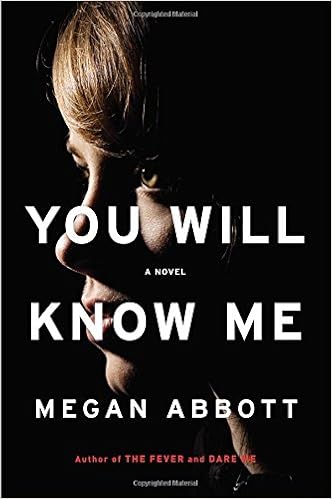 The audacious new novel about family and ambition from “one of the best living mystery writers” (Grantland) and bestselling, award-winning author of The Fever, Megan Abbott.




 Ongoing Information & Trends: A Weblog
Written
on March 27, 2015