The National Book Foundation has announced the long list of 10 books for the 2018 National Book Award for fiction. Finalists will be revealed on Oct. 10.
Fiction
Jamel Brinkley, “A Lucky Man” (Graywolf Press)
Jennifer Clement, “Gun Love” (Hogarth)
Lauren Groff, “Florida” (Riverhead)
Daniel Gumbiner, “The Boatbuilder” (McSweeney’s)
Brandon Hobson, “Where the Dead Sit Talking” (Soho Press)
Tayari Jones, “An American Marriage” (Algonquin)
Rebecca Makkai, “The Great Believers” (Viking)
Sigrid Nunez, “The Friend” (Riverhead)
Tommy Orange, “There There” (Knopf)
Nafissa Thompson-Spires, “Heads of the Colored People” (Atria)
Winners will be announced Nov. 14 at a ceremony in New York City.
Non Fiction
Carol Anderson, “One Person, No Vote: How Voter Suppression Is Destroying Our Democracy” (Bloomsbury)
Colin G. Calloway, “The Indian World of George Washington: The First President, the First Americans, and the Birth of the Nation” (Oxford University Press)
Steve Coll, “Directorate S: The C.I.A. and America’s Secret Wars in Afghanistan and Pakistan” (Penguin Press)
Marwan Hisham and Molly Crabapple, “Brothers of the Gun: A Memoir of the Syrian War” (One World)
Victoria Johnson, “American Eden: David Hosack, Botany, and Medicine in the Garden of the Early Republic” (Liveright)
David Quammen, “The Tangled Tree: A Radical New History of Life” (Simon & Schuster)
Sarah Smarsh, “Heartland: A Memoir of Working Hard and Being Broke in the Richest Country on Earth” (Scribner)
Rebecca Solnit, “Call Them by Their True Names: American Crises (and Essays)” (Haymarket)
Jeffrey C. Stewart, “The New Negro: The Life of Alain Locke” (Oxford)
Adam Winkler, “We the Corporations: How American Businesses Won Their Civil Rights” (Liveright)
Kazuo Ishiguro, winner of the Nobel prize in literature 2017 Photograph: David Levene for the Guardian
Kazuo Ishiguro’s new book features an American woman who claims to be a virtuoso on the cello. She befriends and tutors a young Hungarian cellist earning his living playing in cafes. she tells him “you have it, most definitely you have … potential.” As the days turn into weeks, he wonders why she does not appear to own a cello herself, and eventually, as summer draws to a close, he discovers why. She cannot actually play the instrument at all. So convinced was she of her own musical genius, no teacher ever seemed equal to it, and so rather than tarnish her gift with imperfection, she chose never to realize it at all. “At least I haven’t damaged what I was born with,” she says.
Ishiguro’s fiction is acclaimed for the spare elegance of the writing, a testament to the power of what is left unsaid.
Kazuo was born in Japan, but moved with his parents and two sisters to Surrey when he was five, and has lived here ever since. His parents found British culture quite bewildering, and Ishiguro was inevitably cast in the role of anthropological go-between, but this left him with a fascination with the minutiae of class rather than any wound of dislocation
The Virginia Department of Motor Vehicles is bringing its DMV Connect program to select branches of Central Rappahannock Regional Library.
DMV Connect was developed to serve Virginians who may not be able to travel to a DMV office. Customers will be able to get and renew ID cards, licenses and learners’ permits. Customers can also take care of titles, vehicle registrations, transfers and plate returns. DMV Connect is not able to perform any testing or provide birth, death or marriage certificates.
On Friday, DMV Connect will be at Snow Branch from 10 a.m. to 3 p.m. It will return to Snow Branch on Dec. 1, from 10 a.m. to 3 p.m.
On Nov. 20, Fredericksburg Branch will host DMV Connect, from 10 a.m. to 3 p.m., in the Library Theater. It will be back at Fredericksburg Branch on Dec. 15 from 10 a.m. to 3 p.m. in Meeting Room 1.
Turtles All the Way Downbegins with a fugitive billionaire and a cash reward. It is about a lifelong friendship, the intimacy of an unexpected reunion, Star Wars fan fiction, and tuatara. But at its heart is Aza Holmes, a young woman navigating daily existence within the ever-tightening spiral of her own thoughts.
Going on a lengthy commute? well the New York Public Library has got you covered. In collaboration with the MTA, New York State, TransitWireless and the Queens and Brooklyn Public Libraries, NYPL is bringing us the “Subway Library,” a platform that provides commuters with access to free e-books, short stories and more—whether you’re above or below ground.
Hundreds of people aka “Heroin Tourist” are traveling to Philadelphia every month in dorves because of its reputation for having purer heroin than any other city.
As a result, overdoses in public places have surged, including public libraries, where librarians have begun to stock Narcan to counteract overdoses that occur there.
Librarians have been called into duty so often to revive overdose victims, they have learned to tell the difference between a regular heroin overdose and a more deadly fentanyl overdose, by the sound the victim makes while collapsing, astory in Philly.com reports.
But they are not just using bathrooms, overdoses occur on the lawns and property of public libraries, and other public places, one of which has been dubbed “needle park” for its use by addicts to shoot up.
The Philadelphia Department of Health reported in February about an “alarming increase” in overdose deaths in the city.
During the first five days of December, the city reported 35 deaths from heroin overdoses, most included an amount of fentanyl, a synthetic type of heroin that can be as much as 50 times more dangerous.
The 12 drug deaths reported on December 1, 2016 were more than had ever been reported on a single day to the Medical Examiner’s Office.
Rutherford Public Library hosted the third annual Edible Books Festival competition that offered bookworms a creative sweet venue to illustrate their favorite books and characters in a sweet way.
The event was a fundraiser sponsored by the Friends of the Library of Rutherford. Contestants competed for $50 prizes, while gift baskets of donations from local businesses were raffled. As visitors examined each confectionery delight, contestants discussed how their imaginations guided their designs.
Retiree Jan Livingston won Best Depiction for “Alice in Wonderland.” She decorated cookie squares that featured images of the chapters of the book she loved as a child, including a deck of cards swirling, the Cheshire cat and a Mad Hatter – all held together by licorice sticks.
In a tomb at Ketef Hinnom in Israel, the oldest text of the Hebrew Bible was discovered. The text, inscribed on a silver scroll in the old Hebrew script dating to the 7th Century B.C., is the Aaronic blessing (Numbers 6:24-26), which begins, “yeverekh’kha YHWH Vayishmarekha” (May Yahweh bless you and keep you).
The Library of Ashurbanipal
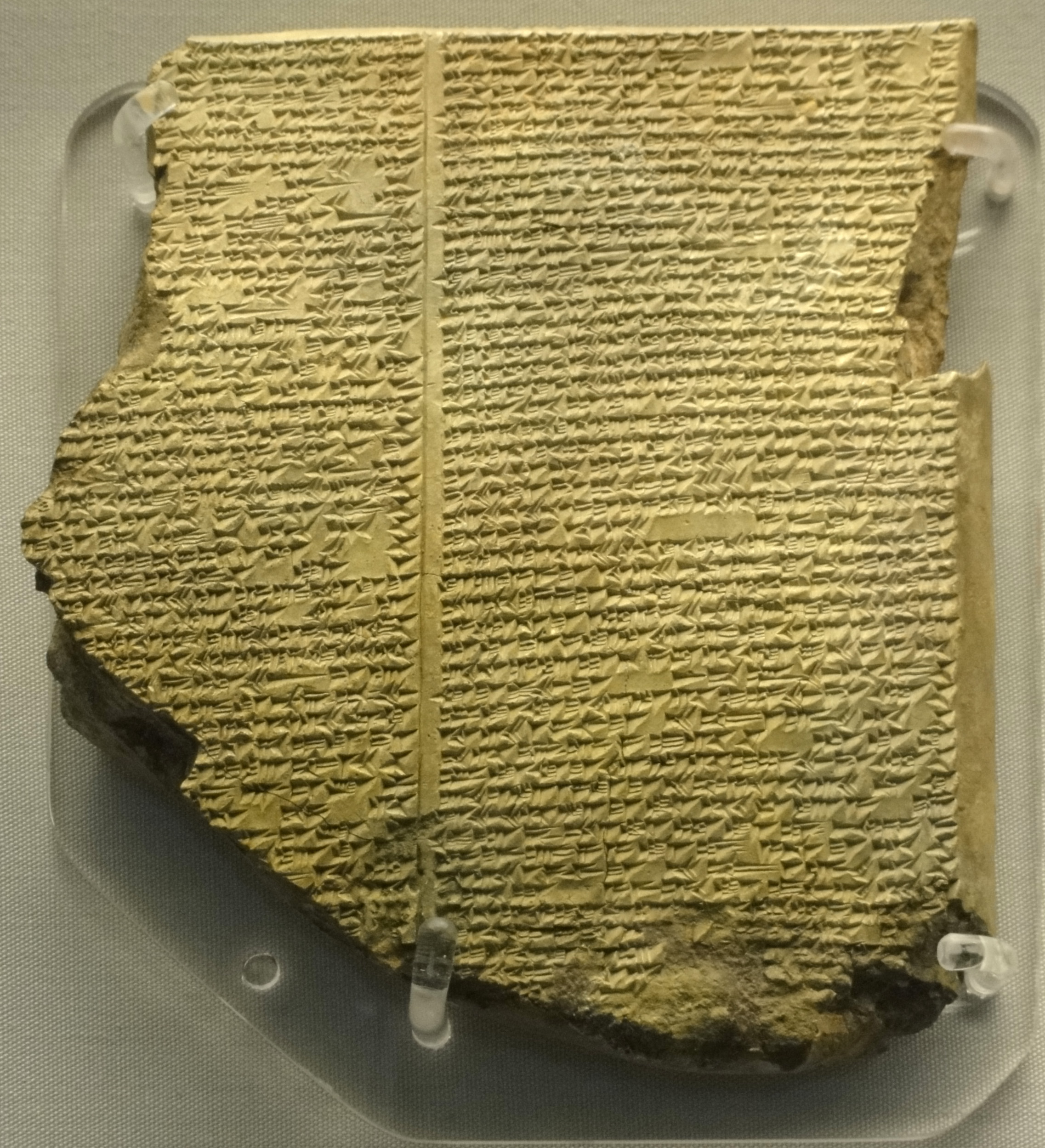
Part of a clay tablet, Neo-Assyrian. (Credit: Public Domain)
The world’s oldest known library was founded sometime in the 7th century B.C. for the “royal contemplation” of the Assyrian ruler Ashurbanipal. Located in Nineveh in modern day Iraq, the site included a trove of some 30,000 cuneiform tablets organized according to subject matter. Most of its titles were archival documents, religious incantations and scholarly texts, but it also housed several works of literature including the 4,000-year-old “Epic of Gilgamesh.” The book-loving Ashurbanipal compiled much of his library by looting works from Babylonia and the other territories he conquered.
The Library of Alexandria
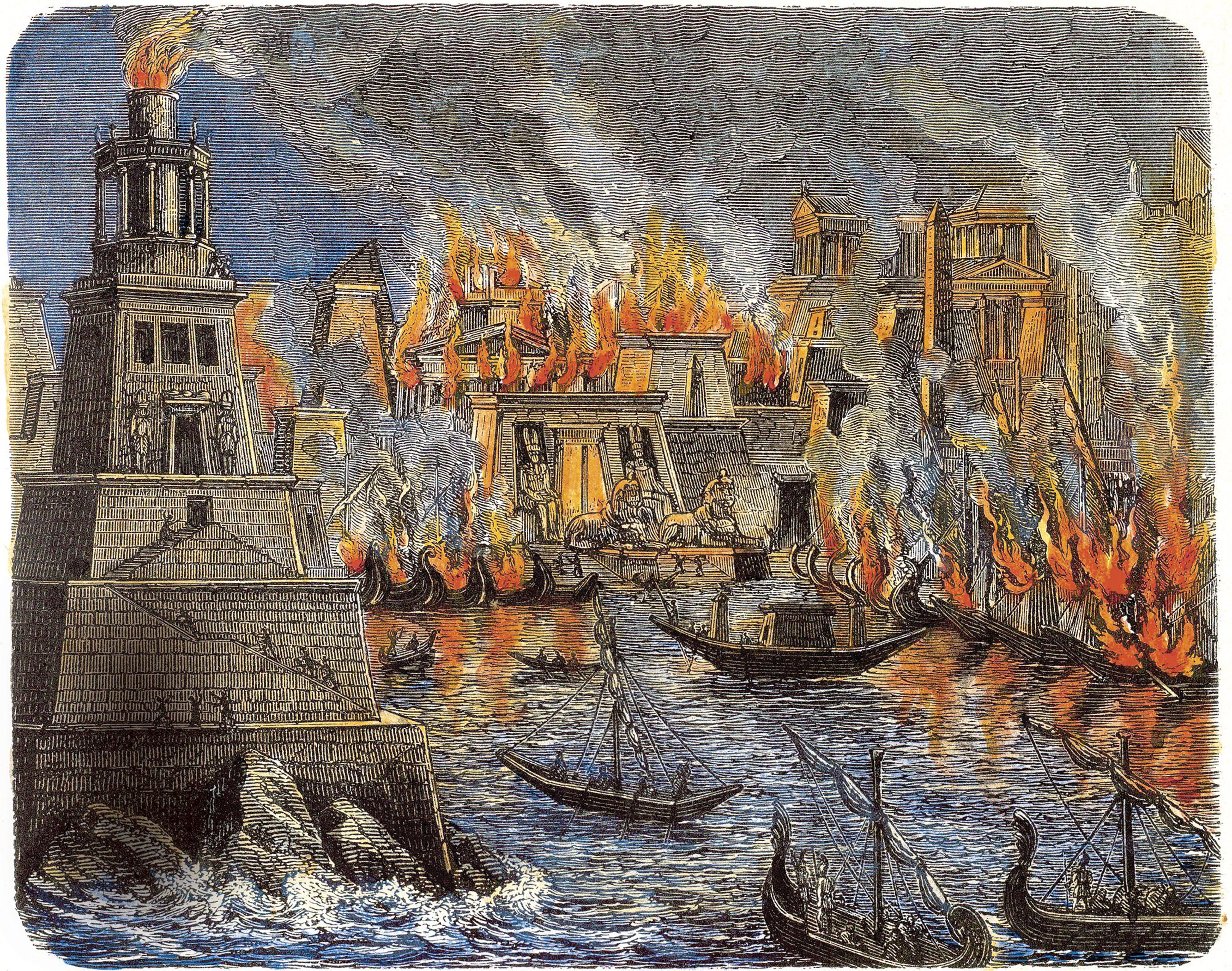
The Burning of the Library of Alexandria, 1876. Private Collection. (Credit: Fine Art Images/Getty Images)
After Alexander, the Great’s death in 323 B.C., control of Egypt fell to his former general Ptolemy I Soter, the Library of Alexandria, which eventually became the intellectual jewel the ancient world was established. Little is known about the site’s architecture, it may have included over 500,000 papyrus scrolls containing works of literature and texts on history, law, mathematics, and science. The library and its associated research institute attracted scholars from around the Mediterranean, many of whom lived on site and drew government stipends while they conducted research and copied its contents. At different times, the likes of Strabo, Euclid, and Archimedes were among the academics on site. The library’s demise is traditionally dated to 48 B.C., when it supposedly burned after Julius Caesar accidentally set fire to Alexandria’s harbor during a battle against the Egyptian ruler Ptolemy XIII.
The Library of Pergamum
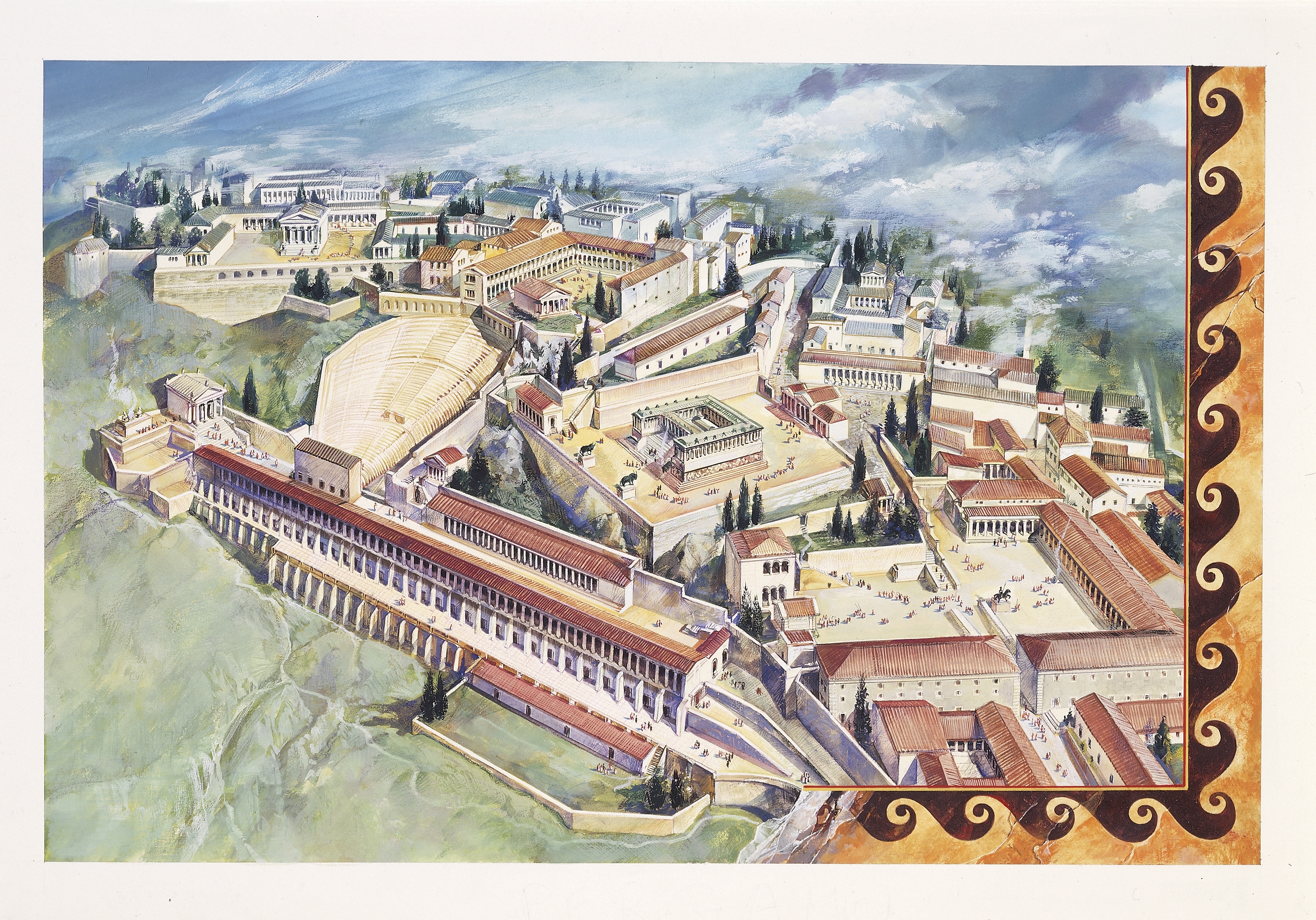
Reconstruction of Pergamon. (Credit: De Agostini/Getty Images)
Constructed in the third century B.C. by members of the Attalid dynasty, the Library of Pergamum, located in what is now Turkey, was once home to a treasure-trove of some 200,000 scrolls. It was housed in a temple complex devoted to Athena, the Greek goddess of wisdom, and is believed to have comprised four rooms—three for the library’s contents and another that served as a meeting space for banquets and academic conferences. According to the ancient chronicler Pliny the Elder, the Library of Pergamum eventually became so famous that it was considered to be in “keen competition” with the Library of Alexandria.
The Villa of the Papyri
The long-buried Villa of the Papyri opened to the public almost 2000 years after it was submerged in volcanic mud in Herculaneum. (Credit: Eric VANDEVILLE/Getty Images)
The “Villa of the Papyri” is the only one whose collection has survived to the present day. It 1,800 scrolls were located in the Roman city of Herculaneum in a villa that was most likely built by Julius Caesar’s father-in-law, Lucius Calpurnius Piso Caesoninus. When nearby Mount Vesuvius erupted in 79 A.D., the library was buried—and exquisitely preserved—under a 90-foot layer of volcanic material. Its blackened, carbonized scrolls were rediscovered in the 18th century. Modern researchers have since used everything from multispectral imaging to x-rays to try to read them. Much of the catalogue still waiting to be deciphered, however, studies have revealed that the library contains several texts by an Epicurean philosopher and poet named Philodemus.
The Libraries of Trajan’s Forum
Trajan’s Forum. (Credit: John Harper/Getty Images)
The Emperor Trajan completed construction around 112 A.D.on a sprawling, multi-use building complex in the city of Rome. There were plazas, markets and religious temples, and also one of the Roman Empire’s most famous libraries. The site was technically two separate structures—one for works in Latin, and one for works in Greek. The rooms sat on opposite sides of a portico that housed Trajan’s Column, a large monument built to honor the Emperor’s military successes. Both sections were elegantly crafted from concrete, marble and granite, and they included large central reading chambers and two levels of bookshelf-lined alcoves containing an estimated 20,000 scrolls. Historians are unsure of when Trajan’s dual library ceased to exist, but it was still being mentioned in writing as late as the fifth century A.D., which suggests that it stood for at least 300 years.
The Masoretes (Hebrew: בעלי המסורה Ba’alei ha-Masora) were groups of Jewishscribe-scholars who worked between the 6th and 10th centuries CE, based primarily in present-day Israel in the cities of Tiberias and Jerusalem, as well as in Iraq (Babylonia
The Library of Celsus
Library of Celsus. (Credit: Public Domain)
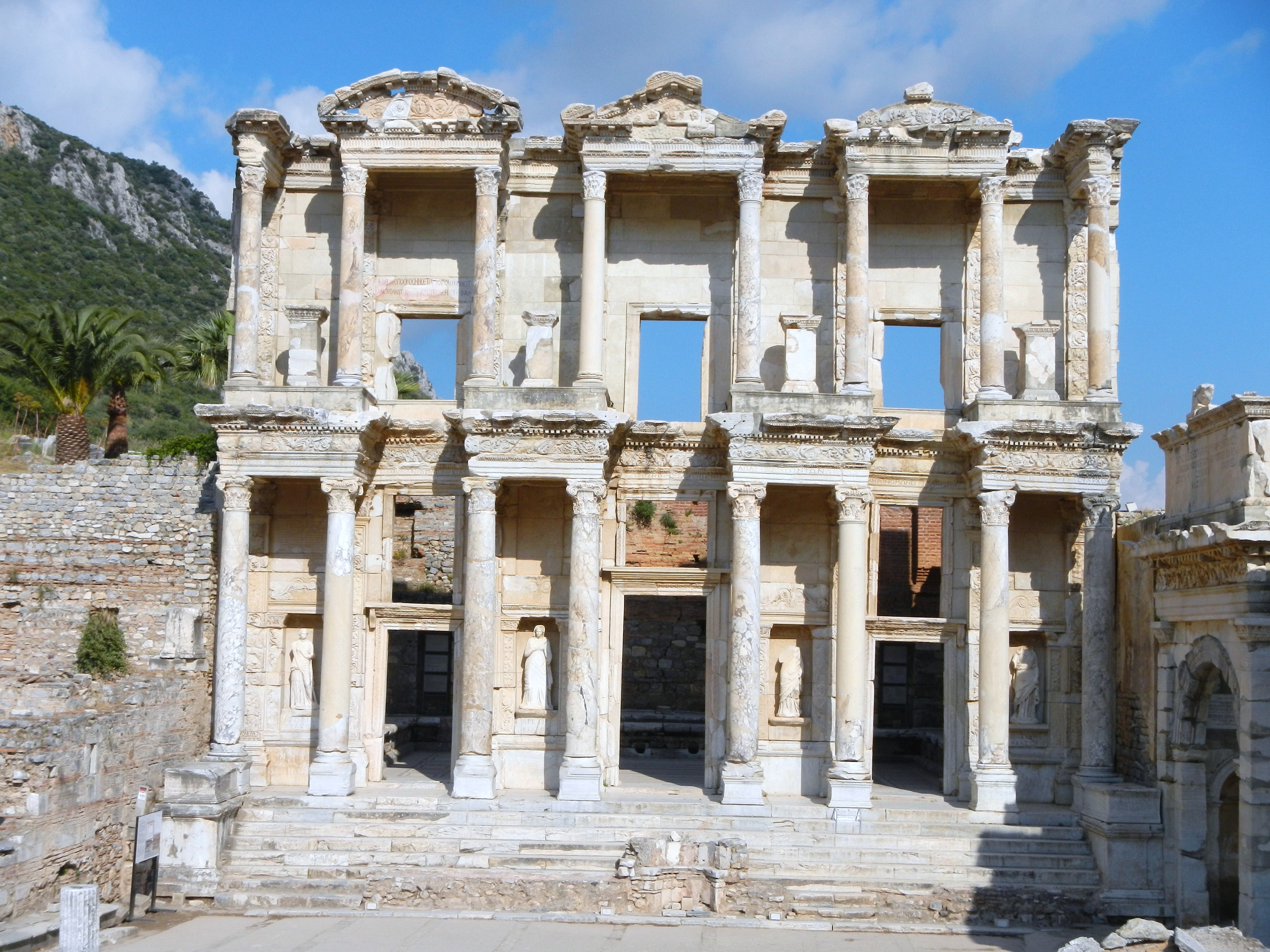
There were over two-dozen major libraries in the city of Rome during the imperial era. Around 120 A.D., the son of the Roman consul Tiberius Julius Celsus Polemaeanus completed a memorial library to his father in the city of Ephesus (modern day Turkey). The building’s ornate façade still stands today and features a marble stairway and columns as well as four statues representing Wisdom, Virtue, Intelligence and Knowledge. The library may have held some 12,000 scrolls, but it most striking feature was no doubt Celsus himself, who was buried inside in an ornamental sarcophagus.
The Imperial Library of Constantinople
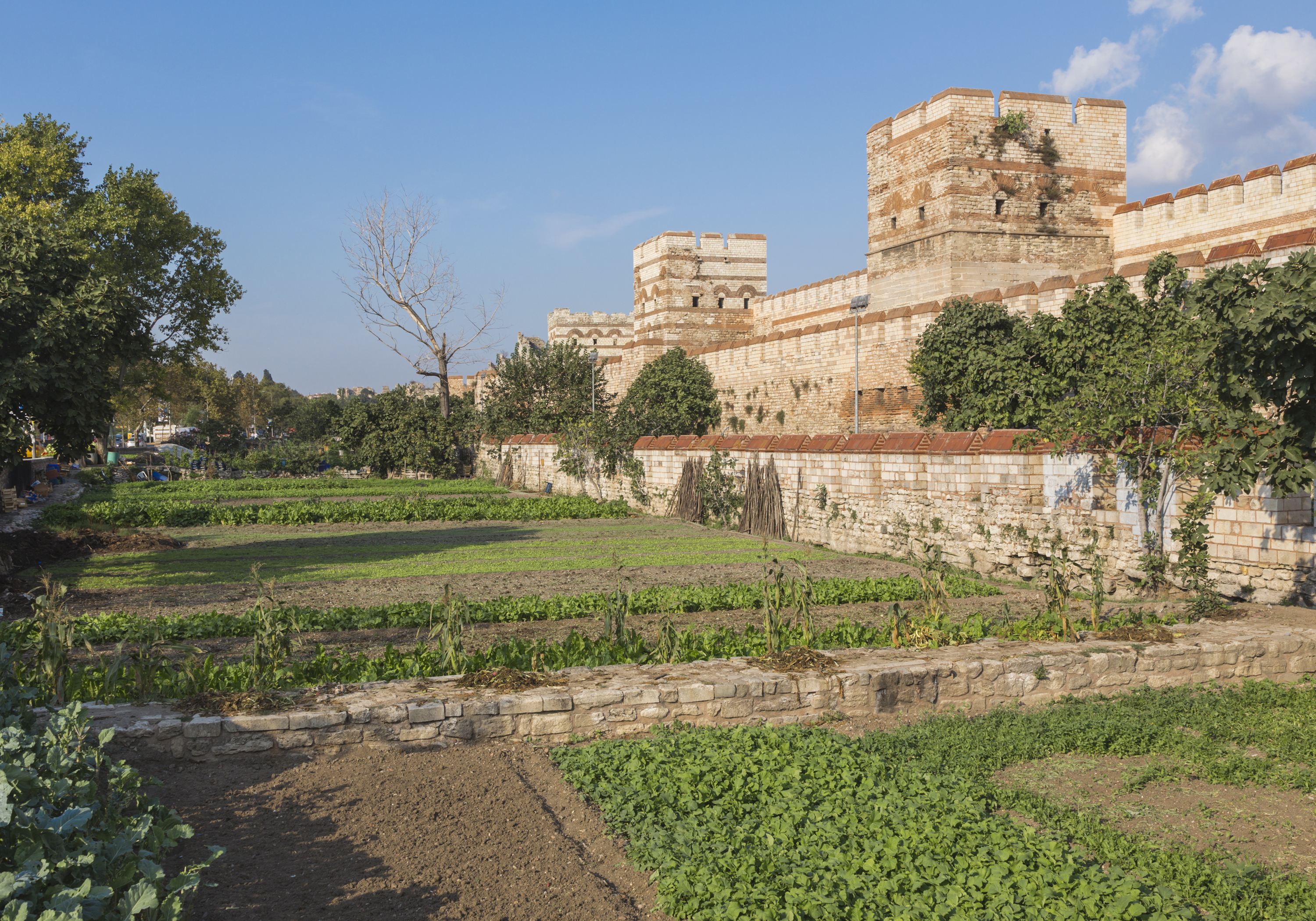
The Theodosian city walls originally built in the 5th century during reign of Theodosius II. (Credit: Ken Welsh/Getty Images)
Even after the Western Roman Empire had gone into decline, classical Greek and Roman thought continued to flourish in Constantinople, the capital of the Byzantine Empire. The city’s Imperial Library was created in the fourth century A.D. under Constantine the Great, but it remained relatively small until the fifth century, when its collection grew to a staggering 120,000 scrolls and codices. The size of the Imperial Library continued to demish for the next several centuries due to neglect and frequent fires, and it later suffered a devastating blow after a Crusader army sacked Constantinople in 1204. Nevertheless, its scribes and scholars are now credited with preserving countless pieces of ancient Greek and Roman literature by making parchment copies of deteriorating papyrus scrolls.
The House of Wisdom
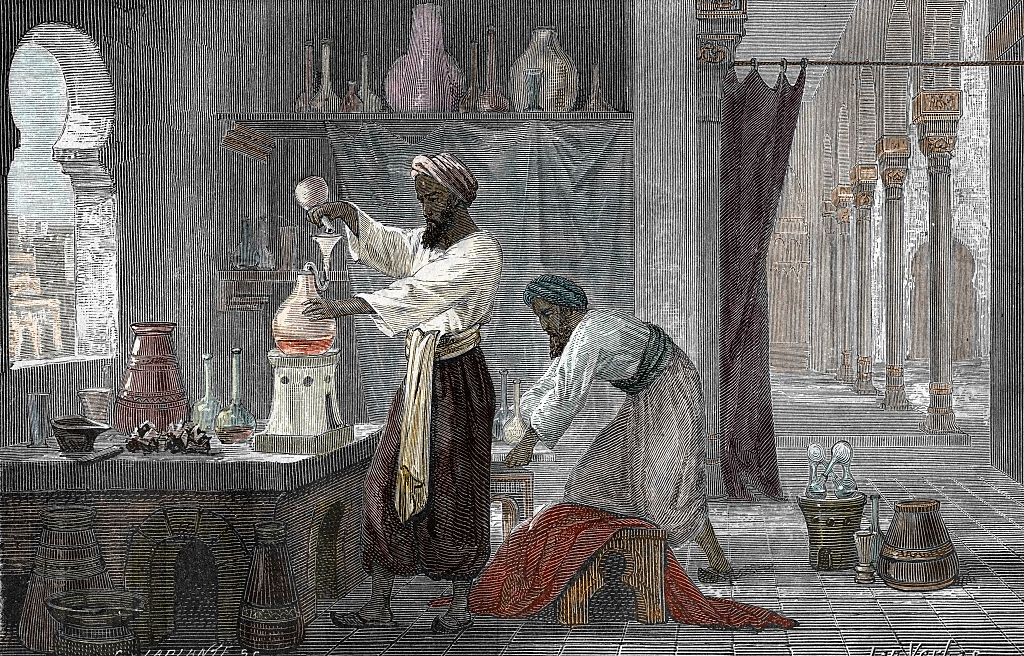
Portrait of Razi polymath, physician and alchemist in his laboratory in Bagdad, Iraq. (Credit: Leemage/Getty Images)
The Iraqi city of Baghdad was once one of the world’s centers of learning and culture, and perhaps no institution was more integral to its development that the House of Wisdom. First established in the early ninth century A.D. during the reign of the Abbasids, the site was centered around an enormous library stocked with Persian, Indian and Greek manuscripts on mathematics, astronomy, science, medicine and philosophy. The books served as a natural draw for the Middle East’s top scholars, who flocked to the House of Wisdom to study its texts and translate them into Arabic. Their ranks included the mathematician al-Khawarizmi, one of the fathers of algebra, as well as the polymath thinker al-Kindi, often called “the Philosopher of the Arabs.” The House of Wisdom stood as the Islamic world’s intellectual nerve center for several hundred years, but it later met a grisly end in 1258, when the Mongols sacked Baghdad. According to legend, so many books were tossed into the River Tigris that its waters turned black from ink.
Modern day militants have reportedly ransacked Mosul library, burning over a hundred thousand rare manuscripts and documents spanning centuries of human learning.Initial reports said approximately 8,000 books were destroyed by the extremist group.
The Timbuktu Libraries
Around 60 libraries in Timbuktu are still owned by local families and institutions, collections that have survived political turbulence throughout the region, as well as the ravages of nature. A good example is the Ahmed Baba Institute, established in 1970, which was named after the famous 16th/17th-century scholar, the greatest in Africa.
Ahmed Baba wrote 70 works in Arabic, many on jurisprudence but some on grammar and syntax. Deported to Morocco after the Moroccan invasion of Songhay in 1591, he is said to have complained to the sultan there that the latter’s troops had stolen 1,600 books from him and that this was the smallest library compared to those of any of his friends.
Today, the Ahmed Baba Institute has nearly 30,000 manuscripts, which are being studied, catalogued and preserved. However, during the period of French colonial domination of Timbuktu (1894–1959), many manuscripts were seized and burned by the colonialists, and as a result, many families there still refuse access to researchers for fear of a new era of pillaging. Other manuscripts were lost due to adverse climatic conditions – for example, following droughts, many people buried their manuscripts and fled.
The Nag Hammadi library (also known as the “Chenoboskion Manuscripts”, or as the “Gnostic Gospels”[1]) is a collection of Gnostic texts discovered near the Upper Egyptian town of Nag Hammadi in 1945. Twelve leather-boundpapyruscodices buried in a sealed jar were found by a local farmer named Muhammed al-Samman.[2] The writings in these codices comprised fifty-two mostly Gnostic treatises, but they also include three works belonging to the Corpus Hermeticum and a partial translation/alteration of Plato‘s Republic. In his introduction to The Nag Hammadi Library in English, James Robinson suggests that these codices may have belonged to a nearby Pachomian monastery, and were buried after Saint Athanasius condemned the use of non-canonical books in his Festal Letter of 367 A.D. The discovery of these texts significantly influenced modern scholarship into early Christianity and Gnosticis
“Reasons to Vote for Democrats: A Comprehensive Guide,” by Daily Wire managing editor Michael J. Knowles, published Feb. 8, features the image of a donkey covered by the Stars and Stripes. He is a conservative. The book available in paperback for $8.03 and does contain headers and a bibliography. The NY Post says it is Amazon’s best seller.
According to a survey conducted by researchers from Durham University in the UK in partnership with the Edinburgh International Book Festival and The Guardian. Almost a fifth of readers said they hear the voices or thoughts of characters in regular life even when they aren’t reading the book, something the researchers call “experiential crossing.” When a good book is in your head and you are thinking about the “voices” involved, it seems logical that those voices would add new perspective to what you see around you. Previous neuroscience research has found that the parts of the brain associated with hearing voices become active when people read dialogue.
Penguin Random House has won in a bidding war for a pair of books by Barack and Michelle Obama.The books are likely to be released in 2018, but there are no official publication dates yet. The publishing house announced the book deal last Tuesday night. CEO Markus Dohle said it would work with the former first couple to “make each of their books global publishing events of unprecedented scope and significance.”
The Financial Times reported that auction between several prominent book publishers had surpassed the $60 million mark. It is speculative as to how much Penguin Random House ultimately paid for the two books. The parties involved declined to comment on the terms of the deal. But the FT said it amounted to “a record sum for US presidential memoirs.”
According to the publishers announcement, the Obamas “plan to donate a significant portion of their author proceeds to charity, including the Obama Foundation.”
Additionally, Penguin Random House will donate one million books “in the Obama family’s name.The couple’s books will be published separately, but publishing houses vied for the rights to the books together. Their Lawyer and literary agent Bob Barnett, represented the couple in the joint book deal.
Former President Obama’s past books were published by Penguin Random House, so the new deal continues a two-decade-long relationship.
Books by the Obamas are virtually guaranteed to be best-sellers, selling millions of copies and generating weeks of media attention.Book industry bidding wars get competitive for other reasons as well. The opportunity to be in business with a famous figure like a former president is a factor.
George W. Bush reportedly received about $10 million for the rights to to his memoir from Crown publishing company.
Smell sampling equipment on Ihesus: The Floure of the Commaundementes of God, printed in London by Wyken de Worde (1521) at the Morgan Library & Museum in New York (photo by Christine Nelson)
Carlos Benaim, master perfumer from International Flavors and Fragrances smelling one of J. P. Morgan’s Pedro Murias Cuban cigars (photo by Christine Nelson)
The sampling equipment on a leather-bound copy of The Golden Legend, printed in London by Wyken de Worde (1521) (photo by Christine Nelson)
The Harry Potter author seems to be attracting a slightly more vicious crowd than usual. After speaking openly and honestly about what she perceives to be a worrying situation in America, Rowling was inundated with negativity and threats of book burnings. One user tweeted that they were planning on burning their DVDs too.
In the wake of the Civil War, Daniel Murray, born free and educated in Baltimore, was in the vanguard of Washington, D.C.’s black upper class. Appointed Assistant Librarian at the Library of Congress—at a time when government appointments were the most prestigious positions available for blacks—Murray became wealthy through his business as a construction contractor and married a college-educated socialite“.
Mississippi Blood by Greg Iles (Morrow, Mar.) – Iles concludes his crime trilogy that began with 2014’s Natchez Burning, a Thriller Award finalist for best novel.
South and West: From a Notebook by Joan Didion (Knopf, Mar.) – A diligent notebook keeper throughout her career, Didion shares her entries from a 1970 road trip through the South and a 1976 stint covering the Patty Hearst trial for Rolling Stone.
The Force by Don Winslow (Morrow, June) – says she always wanted to write Ever a big, New York City cop book and “this is it
Democracy: The Long Road to Freedomby Condoleezza Rice (Twelve, May) – The former secretary of state shares insights from her experiences as a policymaker, scholar, and citizen to put democracy’s challenges into perspective
Everything Under the Heavens: How the Past Helps Shape China’s Push for Global Power by Howard W. French (Knopf, Mar.) The New York Times’s former Asia correspondent tracks China’s ideological development as it becomes an ever more aggressive player in regional and global diplomacy
A Separation, by Katie Kitamura(Riverhead, February 7)
When her soon-to-be-ex-husband goes missing from a Greek island resort, his estranged wife must go search for him. What follows in Katie Kitamura’s third novel is more an existential mystery than an actual one, although the sheer deftness of her storytelling is nothing less than thrilling.
This is Julianna’s story. She lived a normal life until she was about to turn twenty-one, and then all hell broke loose. Years of diabolical scheming unraveling at the seams, unleashing torrents of lies and deceit. The whirlwind of chaos and heartbreak will forever change the game.
Everything You Want Me to Be byMindy Mejia
Full of twists and turns, Everything You Want Me to Be reconstructs a year in the life of a dangerously mesmerizing young woman, during which a small town’s darkest secrets come to the forefront…and she inches closer and closer to her death.
Moshfegh- But as many critics noted is particularly held in awe for her short stories. Homesick for Another World is the rare case where an author’s short story collection is if anything more anticipated than her novel.And for good reason. There’s something eerily unsettling about Ottessa Moshfegh’s stories
Stephanie Garber–At the start of Garber’s magnificent debut novel, the mysterious Master Legend invites sisters Scarlett and Donatella Dragna to attend Caraval—a magical multiday event that is part spectacle, part treasure hunt. Although their tyrannical father has threatened death if they leave home without his permission, Tella strikes a deal with a roguish sailor named Julian for transport to Legend’s private island—a plan that essentially involves kidnapping the conflicted Scarlett, who is weeks away from marrying a man she’s never met. Upon arrival, Tella is taken, and it’s revealed that she is the subject of this year’s hunt. Scarlett and Julian join forces to find her, but in a game in which secrets are currency and appearances deceive, Scarlett has no way of knowing whether she’s a Caraval player or Master Legend’s pawn. Intriguing characters, an imaginative setting, and evocative writing combine to create a spellbinding tale of love, loss, sacrifice, and hope. While the search for Tella drives the narrative, Scarlett’s quest for self-empowerment is equally captivating. Scarlett and Julian’s chemistry intoxicates, and Garber’s tantalizing conclusion will leave readers hungry for a sequel.
Around the Way Girl: A Memoir by Taraji P. Henson with Denene Millner recalls the grit it takes to make it to Hollywood and the obstacles all actresses, but particularly black ones, face.
Difficult Women by Roxane Gay gathers stories of hardscrabble lives, passionate loves, and quirky and vexed human connection
The Jemima Code: Two Centuries of African American Cookbooks by Toni Tipton Martin
A 4-year-old Georgia girl with a voracious appetite for reading was given a chance to be “Librarian For the Day” at the Library of Congress this week. Daliyah Marie Arana of Gainesville, Ga., has read more than 1,000 books, the Gainesville Times reports .
On Wednesday, Daliyah visited the Library of Congress in Washington, D.C., and was named “Librarian For The Day.The four-year-old roamed the hallways with Carla Hayden, the 14th Librarian of Congress, who tweeted photos of Daliyah sitting in her desk.Daliyah’s mother told the the Gainesville Times, that her daughter joined Georgia’s “1,000 Books Before Kindergarten,” almost two years ago and started paving her way through books.
Fake or sensationally biased news sources now has escalated. The central focus of the concern is Facebook, which has grown beyond a social platform and is now a key information distributor from which 44 percent of Americans get their news.
Detecting fake news-The Verge talked to Professor Nicole A. Cooke of the University of Illinois. Professor Cooke works in the University’s top-ranked School of Information Sciences, focusing on human information behavior, information literacy, and diversity in librarianship. She says ” Information literacy is just trying to get people to be savvy consumers of information, and getting them to be able to really interrogate the information that is available to them, to see what is quality, to evaluate sources, et cetera.” Her rule of thumb for identifying fake news “If you see something on Facebook or Twitter, a lot of people get caught up with just forwarding information without actually reading the article or examining the site. When you see a very salacious headline or something that’s challenging, sometimes the inclination is to forward it without checking. You have to ask: does this appear in multiple places or did you only see it on Facebook? This misinformation is perpetuated because people aren’t taking the time to evaluate sources before they accept it as truth and / or pass it on to others.”
OR Books, an independent progressive publisher based in New York City, announced a January launch for the book,“Hillary Clinton: The Goldman Sachs Speeches.”The publisher has taken five of Clinton speeches — including the three she gave to Goldman Sachs for $675,000 a pop — and added on an introduction from the man responsible for leaking them, WikiLeaks founder (and the new darling of the alt-right) Julian Assange.
OR Books co-publisher Colin Robinson says it could print the Democratic candidate’s speeches in full under the legal doctrine of “fair use,” which allows the publication of copyrighted material for a limited or “transformative” purpose
Some say,” The Library of Congress is simply not equipped to join the 21st century”. The Government Accountability Office estimates that the LOC spends roughly $120 million dollars on IT functions, but the library’s accounting records leave much to be desired, particularly when recording acquisitions of new IT assets. The copyright office still runs on a largely paper based system (some records kept are still kept in card catalogues) and is forced to share the library’s aging IT systems. Large digital projects have even failed to materialize, such as the promise of an archive of everything that has been tweeted since 2010. Digitization projects are so far behind that only a fraction of the Library’s 24 million titles have been made available online. It is the hope of many policy advocates and scholars that with Carla Hayden in the top job, the former crown jewel of American libraries can be pulled out of mothballs and dragged into the 21st century.
Scientists from MIT (Massachusetts Institute of Technology) and Georgia Tech (Georgia Institute of Technology have come together to develop a new technology that will allow users to read a book without even opening it. The results were published in the scientific journal, Nature Communications. Upon its use on a stack of newspapers with one letter printed on each, the system was able to identify the letters printed on the top nine sheets correctly. The scientists stated that the system could be useful to analyze any materials organized in thin layers, like on coatings on machine parts and others. The Metropolitan Museum in New York, think that the new system will be of monumental help in looking at some antique books that are too fragile even to touch.The system functions on a set of algorithms that read images from individual sheets of paper put up in a stack and interprets the distorted images from the stack as individual letters. A lot of websites have these letter certifications (captchas) to make sure you’re not a robot.
The system uses terahertz radiation, which unlike X-ray, can distinguish between printed and blank parts on paper. In the process, a terahertz camera emits ultrashort bursts of radiation, the reflections from which are picked up by the built-in sensor. The system can read the distance to the individual pages of a book from the time that a reflection takes to travel back to the sensor.
In its present stage, the system can only read up to nine pages in a stack correctly, beyond which the signals become too weak to interpret the results correctly.
President Obama has another decision, a new Director for his new library and museum in Chicago. the Obama library is scheduled to open in 2021 in Jackson Park. The Government will administer its Archives and museum. The nonprofit Obama Foundation will oversee its own offices and activity space. the countries top archivist will consult with the president on the hiring.
A police in a shoot/don’t shoot demonstration in Florida went shockingly wrong when an officer shot and killed a 73-year-old former librarian with what police said was real ammunition used by mistake at an event designed to bring police and the public together.
Authorities didn’t immediately say how a gun with a live round came to be used at Tuesday evening’s demonstration, noting blank rounds are typically used in such classes. The officer, who wasn’t immediately identified, has been placed on administrative leave, and the Florida Department of Law Enforcement is investigating.
“We were unaware that any live ammunition was available to the officer,” Punta Gorda Police Chief Tom Lewis said at a news conference Wednesday. “The officer involved is grief stricken. We’ve got officers assigned to him to make sure he’s psychologically stable.”
Mary Knowlton, a well-known community volunteer, was shot after being randomly selected to take part in the role-playing scenario illustrating the split-second decisions an officer must make about firing. It was part of a popular citizens academy attended by 35 people, including her 75-year-old husband. The Florida officer who killed a woman Tuesday night during a role-play simulation was reportedly asked to resign by another south Florida police department. It seems that earlier this year he sic his dog on a cyclist.
While Cher Horowitz was probably too popular to find time to read Jane Austen, the author’s 1815 classic novel, Emma, sets the framework for the cult favorite movie. Cher is basically an updated Emma in an Alaïa dress.
2. He’s Just Not That Into You =He’s Just Not That Into You by Greg Behrendt and Liz Tuccillo
With an all-star cast: Jennifer Aniston, Bradley Cooper, Ginnifer Goodwin. And while the movie told a fictional story about a bunch of couples, it’s actually based on a self-help book. It’s full of timeless, tough-love advice, and it’s perfect for anyone playing the field.
3. She’s The Man = Twelfth Night by William Shakespeare
William Shakespeare wrote the plot in 1623 with his play Twelfth Night. The movie, obviously, is a modern update, but it gives lots of nods to Shakespeare’s original. Sebastian, Duke, Olivia, and Viola are all character names in both the movie and play.
4. Carol =The Price Of Salt by Patricia Highsmith
The Cate Blanchett-Rooney Mara romantic drama Carol was an Oscar favorite in 2015. It’s based on a revolutionary 1952 novel, which author Patricia Highsmith originally published under a pseudonym.
The Oscar-winning movie tells the life story of a teen from Mumbai, and it’s riveting stuff. The novel it’s based on, Q & A, is equally a can’t miss, as it delves further into the main character’s rise from the slums to game show TV star.
6. The Imitation Game =Alan Turing: The Enigma by Andrew Hodges
A biography about the “founder of computer science” might not sound *exciting* off the bat, but Alan Turing was truly fascinating: In his short life, he helped fight the Nazis, laid the groundwork for modern computers and artificial intelligence, and struggled as a gay man in a homophobic world. His story inspired the powerful movie The Imitation Game, and the book delves even deeper into the fascinating life of Turing.
7. Mean Girls =Queen Bees And Wannabes by Rosalind Wiseman
The 2009 non-fiction book Queen Bees And Wannabes explores the clique-filled world of high school and gives tips on how girls can survive “the jungle” and their own personal Regina George.
8. Mrs. Doubtfire = Alias Madame Doubtfire by Anne Fine
Robin Williams’ classic cross-dressing comedy is actually based on an English novel from 1987.
The timeless shark story Jaws started as a thrilling book of the same name by Peter Benchley. Published in 1974, Benchley spent lots of time researching real-life shark data while writing the story.
10. How To Lose A Guy In 10 Days = How to Lose a Guy in 10 Days: The Universal Don’ts of Dating by Michele Alexander and Jeannie Long
The winning Kate Hudson How To Lose A Guy In 10 Days actually began as a how-to dating book. Similar to the movie’s plot, authors Michele Alexander and Jeannie Long dispel their advice on what not to do within the first 10 days of dating a guy.
11. Pitch Perfect = Pitch Perfect: The Quest For Collegiate A Cappella Glory by Mickey Rapkin
The idea for this movie came from journalist Mickey Rapkin’s non-fiction book exploring the world of college a capella. The book provides more of the history behind acapella groups and focuses on three real college groups competing for glory.
12. 10 Things I Hate About You = Taming Of The Shrew by William Shakespeare
The plot for the iconic ’90s movie—starring Julia Stiles and Heath Ledger—was written in the late 1500’s by one Williams Shakespeare. Stiles, naturally, serves as the “shrew” in the modern update.
The U.S. Senate on Wednesday voted to confirm Dr. Carla D. Hayden, the current chief executive officer of Baltimore’s Enoch Pratt Free Library, to be the 14th Librarian of Congress.
President Obama nominated Hayden in February.
“Dr. Hayden has devoted her career to modernizing libraries so that everyone can participate in today’s digital culture,” Obama said at the time. “She has the proven experience, dedication, and deep knowledge of our nation’s libraries to serve our country well and that’s why I look forward to working with her in the months ahead.”
Dr. Hayden has been a trail-blazing leader of Baltimore’s Enoch Pratt Free Library, where she has advanced access and technology and has put children and families at the heart of the city’s historic library system. America’s library will have an extremely qualified leader.
Following incumbent Librarian of Congress James Billington’s retirement, some conservatives have convened around the idea that the next person to head the library ought to be a prestigious scholar, rather than a professional library administrator like Carla Hayden — President Barack Obama’s nominee to succeed Billington.
It appears that these critics have failed to give proper consideration to the library’s unique challenges – or the skills needed to modernize and make accessible the tremendous wealth of knowledge in its collection.
Hans von Spakovsky, a Heritage Foundation scholar who focuses on civil justice and election issues, lays out the most in-depth case against Hayden in a seriesofarticles at the conservative outlet PJ Media.
First of all, von Spakovsky suggests Obama chose Hayden because she’s a black woman and “his administration has an unofficial quota system.” Secondly, he is overlooking Hayden’s qualifications as a librarian: She has a doctorate in library science from the University of Chicago; taught at the University of Pittsburgh; served as CEO of the City of Baltimore’s Enoch Pratt Free Library, one of the oldest public library systems in the nation; served as president of the American Library Association; and was named National Librarian of the Year.
Von Spakovsky, to bolster a weak argument, also appeals to tradition to oppose Hayden. Since the Library of Congress was created by an act of Congress in 1800, there have been 13 librarians. Not all were esteemed scholars. The first librarian of Congress, John J. Beckley, was a politician, campaign manager and former clerk of the House of Representatives. Other librarians came from a wide range of professional backgrounds, which have included physicians, journalists, poets, lawyers and also several experienced library administrators.
The librarian of Congress does the kinds of things you would expect a librarian to do. It’s therefore strange to see so many conservatives claiming that we need a “scholar-in-chief,” without thinking very deeply about it. For instance, the National Review editorial board’s complaint that Obama “politicizes” the library in nominating a professional library administrator like Hayden is as ridiculous as it is ironic for failing to understand its historical context. The original idea of nominating a “scholar-in-chief,” of course, was to politicize it.
The librarian can help make the library’s vast collections available online; create new means of access for the disabled; increase engagement with stakeholders; better organize existing resources; and improve access to congressional information. Moreover, be a progressive and innovative with a demonstrated record of accomplishments in dealing with complex issues in a multicultural environment. An exceptional people manager. The librarian is very comfortable engaging directly with the public and displays a passion for working with and serving people. An expert communicator, with seasoned diplomatic skills and a talent in bringing people together. This individual must thrive on change and be flexible, adaptable and willing to work in a progressive, ever transforming environment. As a trend-spotter and risk-taker, this person has a knack for assessing community needs and trying out innovative solutions. The ideal candidate is outward looking, enthusiastic and tireless. She or he is not only a leader, but a developer of leaders. But to accomplish these goals, a librarian is needed to make things happen.
Scholars and poets are nice, but they don’t know how to run a library any more than a former Federal Election Commission member like von Spakovsky.
Smokey Robinson will be the next recipient of the Library of Congress Gershwin Prize for Popular Song. Robinson, whose half-century career has included dozens of top 40 hits including such classics as “Going to a Go-Go,” “You’ve Really Got a Hold on Me,” “The Tracks of My Tears,” “I Second That Emotion” and “The Tears of a Clown” was described as the “poet laureate of soul” in a statement announcing the honor.
The Prize, which honors a living musician’s lifetime achievement in promoting songs as a means to cultural understanding, inspiring new generations and entertaining audiences, will be handed out in Washington, D.C., in November. Previous recipients include Paul Simon, Stevie Wonder, Sir Paul McCartney, Carole King, Billy Joel and Willie Nelson.
In 2007, the National Recording Registry of the Library of Congress named “The Tracks of My Tears” as one of the nation’s culturally, historically or aesthetically significant sound recordings. Robinson scored solo hits as well as chart-toppers with the Miracles while writing hit songs for Marvin Gaye, Temptations, Mary Wells and the Marvelettes and spawning covers by the Beatles (“You’ve Really Got A Hold On Me”), the Rolling Stones (“Going To A Go-Go”), Michael Jackson (“Who’s Loving You”) and The Supremes (“I Second That Emotion”).
A tiny library in New Hampshire promotes privacy and fights government surveillance—to the dismay of law enforcement.
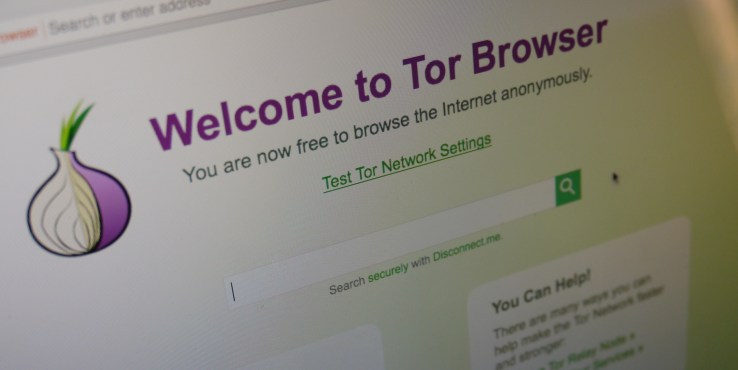
The Kilton Public Library in Lebanon NH, a city of 13,000, last year became the nation’s first library to use Tor, software that masks the location and identity of internet users, in a pilot project initiated by the Cambridge, Massachusetts-based Library Freedom Project. Users the world can have their searches randomly routed through the library.
Computers that have Tor loaded on them bounce internet searches through a random pathway, or series of relays, of other computers equipped with Tor. This network of virtual tunnels masks the location and internet protocol address of the person doing the search.
What makes the Kilton Public Library unique among other U.S. libraries, it also has a computer with a Tor exit relay, which delivers the internet query to the destination site and becomes identified as the last-known source of the query.
Founder & Director of the Library Freedom Project, said her organization chose Kilton for its pilot project because it had embraced other privacy-enhancing software the project recommended and because she knew the library had the know-how take it to the complicated exit-relay stage.
What can Tor Do?
Protect shoppers, victims of domestic violence, whistleblowers, dissidents, undercover agents—and criminals—alike. A recent routine internet search using Tor on one of Kilton’s computers was routed through Ukraine, Germany, and the Netherlands
The Tor Project is funded largely by the U.S. State Department and other federal agencies, yet the Department of Homeland Security rejects the idea of its use by civilians because it can be used to mask criminal activity.
Local police, at the behest of Homeland Security’s Boston bureau, asked the Kilton library last July to stop using Tor. Its use was suspended until the library board voted unanimously at a standing-room-only meeting in September to maintain the Tor relay.
Jacob Appelbaum, has stepped down in response to what it called “public allegations of sexual mistreatment.” Tor is free software that channels internet traffic through a series of relays to anonymize its users. In addition to his security research at the Tor Project, Appelbaum is a journalist who worked on WikiLeaks and the Edward Snowden disclosures.
Rolling Stone dubbed him the “public face of the Tor Project” in a 2010 profile that detailed his involvement with Tor and WikiLeaks.
Tor Project executive director Shari Steele provided a statement . Alison Macrina, the founder of The Library Freedom Project, also referenced the allegations on Twitter, saying she had spoken to several victims. The Library Freedom Project is an organization that educates librarians about privacy and collaborates with the Tor Project to establish Tor exit nodes in libraries. “no more open secrets, no more missing stairs. you’re not alone. you were never alone. and I’m pretty sure things are just getting started,” Macrina tweeted.
Appelbaum posted a response to the allegations against him on Twitter, saying they are part of a “calculated and targeted attack” intended to undermine his advocacy work.
Appelbaum suggested that he would sue his accusers if necessary to clear his name, calling the allegations libelous. His full statement is here
British libraries offer full bibliotherapy services, including recommendations and exhaustive reading lists based on condition, to anyone, at every library in the U.K., at no cost.This year, London-based charity The Reading Agency and the Society of Chief Librarians expanded bibliotherapy service to form Reading Well for Young People, an extension of its regular adult program to help teens and children find their way through problems like mental illness, bullying, exam pressure and eating disorders.
Nearly half a million people have used the service since its inception in January 2015, the Reading Agency reports — 90 percent of people who borrowed “prescribed” books based on their conditions said they helped and 85 percent said the books helped their symptoms feel manageable. Experts say books featuring characters or people that share a patient’s struggles can be an incredibly important piece of a larger treatment plan designed to give patients something a pill can’t always offer: Hope
Bibliotherapy likely first came to the U.S. from Britain after World War I. Jane Austen novels helped calm soldiers afflicted with PTSD (then called “shellshock”). Then, as now, the main premise of bibliotherapy is pretty simple: Personal transformation through reading. People potentially stand to learn and be emotionally affected as much by a fictional person or situation.
Librarian and bibliotherapist Sadie Peterson Delaney, prescribed books to recovering African-American veterans at the U.S. Veterans Administration Hospital in 1920s Tuskegee, Alabama. She started small, using fairy tales to help bed-ridden, traumatized veterans make sense of their own emotional struggles and then began a public appeal for book donations for and about black Americans to help her patients, as she put it, “fit themselves for life.”
W.E.B. Du Bois’ “Dark Princess” gave her patients purpose and hope to take with them when they were released back into segregated America.
“Books about the Negro cannot be written fast enough to satisfy the insatiate desire of these veterans,” wrote Delaney, who saw such books as “aiding him in his upward struggle to lay aside prejudice, all sense of defeat, and to take in that which is helpful and inspiring by the means of books.”
Nursing a broken heart? The Medicine is Charlotte Bronte’s “Jane Eyre”. Patients are given a lengthy questionnaire and talk sessions (often via Skype) before being presented with a reading list of six books tailored to their individual needs. This is crucial to avoid making matters worse.
Recent stats show e-book sales slipping and print book sales advancing slightly. Sony is no longer selling an e-reader. Amazon is opening physical bookshops.
Reasons people prefer eBooks:
Storage – People can store hundreds, even thousands, of books within one device.
Ease of purchase – Buying an eBook is just a click away.
Portability – The worst thing is finishing a book on vacation and not having the next book to start.
Price – The price of an eBook is usually less than a print book.
Purchasing Options – A person can find an eBook at almost 80 different online outlets.
Reasons people prefer print books:
Tangibility – They get a tangible item for their money.
Accomplishment – They feel more accomplished when the mass of the book moves from the right side to the left and they know they are almost done.
Library – Some people like to have a library of books to select from.
Aroma – Some people like the smell.
DIY – One person has said she couldn’t use a stack of eBooks to prop up her couch if the leg fell off.
Who is Doing all the Reading?
in 2005:
Gender: Female (53%) vs. Male (42%) – 11pt differential! Age: 18-29 (40%), 30-49 (47%), 50-64 (51%), 65+ (47%
How do People Find New Books to Read?
Not much has changed from 1999 to 2005. Below are the % statistics for 2005.
Choosing an Author whose book you like: 30%
Based on Recommendation from someone you know: 27%
Today’s modern libraries offer e-book and e-magazines, plus movies on DVD and other digital items such as services as free Wi-Fi, used bookstores. 90% of libraries now offer e-books for your device, and 39% lend e-readers to library patrons. Public libraries across the country are getting creative when it comes to being a resource for their communities. Michigan’s Ann Arbor District Library loans out art prints for two months. Library users can also check out art supplies with dies, musical instruments and microscopes. Board games, fishing poles and tackle boxes are available in Michigan’s St. Clair County Library System. And it’s not just household items. The Mesa Public Library in Arizona has a seed library, where library card-holders can get three free seed packets a month to start a garden.
New York Libraries has I-pads, and computers for the toddlers and gaming equipment like X-box and PS4 for teens, adults and seniors.
Indianapolis’ library system and a host of others,offer students the ability to text a librarian or email or chat with a tutor for free).
If your child has prepared for the SAT/ACT and is ready to start applying to colleges, libraries also have information on awards, grants and scholarship that can help tremendously with the cost of college tuition.
Treadmill work stations offer a way for library patrons to burn a few calories while reading or surfing the web. Three branches of the Phoenix Public Library allow visitors to reserve walking computers for 30-minute sessions. Central Library in Phoenix and THINKspot at Red Mountain Library in Mesa, Ariz., are two such maker spaces that provide tools and resources for exploring science, technology, engineering, math and art (STEAM).
Libraries offer public access to specialized equipment like 3D printers, as well as training and a collaborative environment in which to create. Other libraries offer classes and services for aspiring artists, novelists and people interested in learning out-of-the-box skills. The Bubbler at Madison Public Library in Wisconsin holds courses ranging from videogame design to screen-printing and painting. Brooklyn Public Library in New York offer classes in digital camera editing.
Local artists have also used the Media Lab facilities at the Madison Public Library to record and produce their music.
Libraries have been shifting from book repositories to community learning centers for years. Today many libraries offer online classes, workforce training, tax aid, health promotion, and resume and career-building support.
Library employee Rachel Dovel has been transitioning from male to female over the past two years. February of last year, she changed her name legally from Nathan and has come out as transgender. Now, she says she needs gender confirmation surgery to complete her transition and match her physical traits with the gender she identifies with. The library’s insurance doesn’t cover that procedure. The library’s 7 board trustees say they haven’t made a decision one way or the other about the coverage and say they’re not trying to discriminate against Dovel. The board will consider whether or not to acquire trans-inclusive benefits in August. The coverage will cost a little more than the library’s current plan, though advocates say that price increase is minimal. Dovel says that after a year-long fight to get the surgery, the end of the summer is too long to wait..
Dovel’s attorney says they are prepared to file a federal gender-discrimination lawsuit against the library. Rachel’s case against the library will be a case of first impression in the country, meaning no employer in the United States has refused to offer coverage for gender confirmation surgery, leading their employee to file a federal lawsuit,” Dovel’s attorney Josh Langdon said at a news conference April 12 in front of the downtown library. “Just like Obergefell v. Hodges, Cincinnati will literally make history with Rachel’s case.”
Dovel, who works processing books for circulation, has been with the library for more than a decade. Dovel initially sought to have the surgery under the library’s health insurance policy. But she was informed that the policy under Anthem Blue Cross and Blue Shield did not offer coverage for the procedure. Dovel and attorneys challenged Anthem, saying the fact it did not offer the coverage violated gender discrimination clauses under the Affordable Care Act. The insurance company eventually complied, offering supplemental coverage for transgender care, including the procedure Dovel would like to receive. However, the library has yet to purchase that coverage.
A number of local corporations already offer such coverage, including Macy’s and Kroger. Trans advocates say procedures like the one Dovel is seeking are vital.
The pew research found that millennials read more than people over 30. Three generations of millennials comprises of high schoolers (ages 16-17); another is college-aged (18-24), and a third generation is 25-29. They have their own distinct habits with book reading, library usage patterns, and attitudes about libraries. Millennials believe imports information can not be found on the internet.Millennials will read books as much as their elders. They read as much e-books as the adults in their 30’s & 40’s.Millennials are as likely as older adults to have used a library in the past 12 months, and more likely to have used a library website. However, many say they know little or nothing about the local library’s services. Teens (ages 16-17) are more likely to read (particularly print books), for work or school, and more likely to use the library for books and research than older age groups.
Makerspaces, incubators for small businesses, and programs support entrepreneurs and the new workforce which is now commonplace in libraries around the world.Libraries are also experimenting with new ways to organize and display collections.











 Modern day militants have reportedly ransacked Mosul library, burning over a hundred thousand rare manuscripts and documents spanning centuries of human learning.Initial reports said approximately 8,000 books were destroyed by the extremist group.




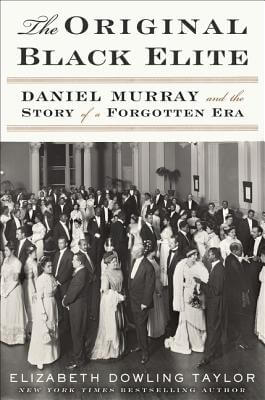 In the wake of the Civil War, Daniel Murray, born free and educated in Baltimore, was in the vanguard of Washington, D.C.’s black upper class. Appointed Assistant Librarian at the Library of Congress—at a time when government appointments were the most prestigious positions available for blacks—Murray became wealthy through his business as a construction contractor and married a college-educated socialite
 Mississippi Blood by Greg Iles (Morrow, Mar.) – Iles concludes his crime trilogy that began with 2014’s Natchez Burning, a Thriller Award finalist for best novel.
 The Force by Don Winslow (Morrow, June) – says she always wanted to write Ever a big, New York City cop book and “this is it
 Democracy: The Long Road to Freedom by Condoleezza Rice (Twelve, May) – The former secretary of state shares insights from her experiences as a policymaker, scholar, and citizen to put democracy’s challenges into perspective
 Everything Under the Heavens: How the Past Helps Shape China’s Push for Global Power

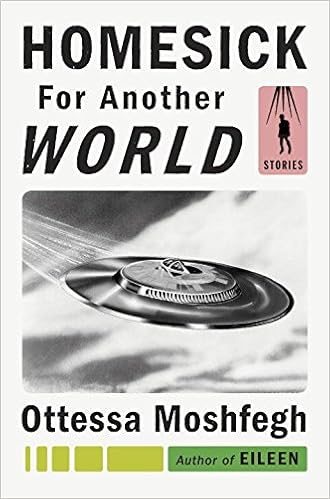 Moshfegh- But as many critics noted is particularly held in awe for her short stories. Homesick for Another World is the rare case where an author’s short story collection is if anything more anticipated than her novel.And for good reason. There’s something eerily unsettling about Ottessa Moshfegh’s stories
 Around the Way Girl: A Memoir by Taraji P. Henson with Denene Millner recalls the grit it takes to make it to Hollywood and the obstacles all actresses, but particularly black ones, face.






 Ongoing Information & Trends: A Weblog
Written
on September 2, 2016