Always Providing You With Ongoing Information

Archive for the ‘Robotics’ Category

Google’s AI can Detect Breast Cancer Better Than Humans

Snapshot138_009

Google has delivered further evidence that AI could become a valuable tool in detecting cancer. The company’s researchers have developed a deep learning tool that can spot metastatic (advanced) breast cancer with a greater accuracy than pathologists when looking at slides. The team trained its algorithm (Lymph Node Assistant, aka LYNA) to recognize the characteristics of tumors using two sets of pathological slides, giving it the ability to spot metastasis in a wide variety of conditions. The result was an AI system that could tell the difference between cancer and non-cancer slides 99 percent of the time, even when looking for extremely small metastases that humans might miss.

Jobs of The Future

Snapshot_143

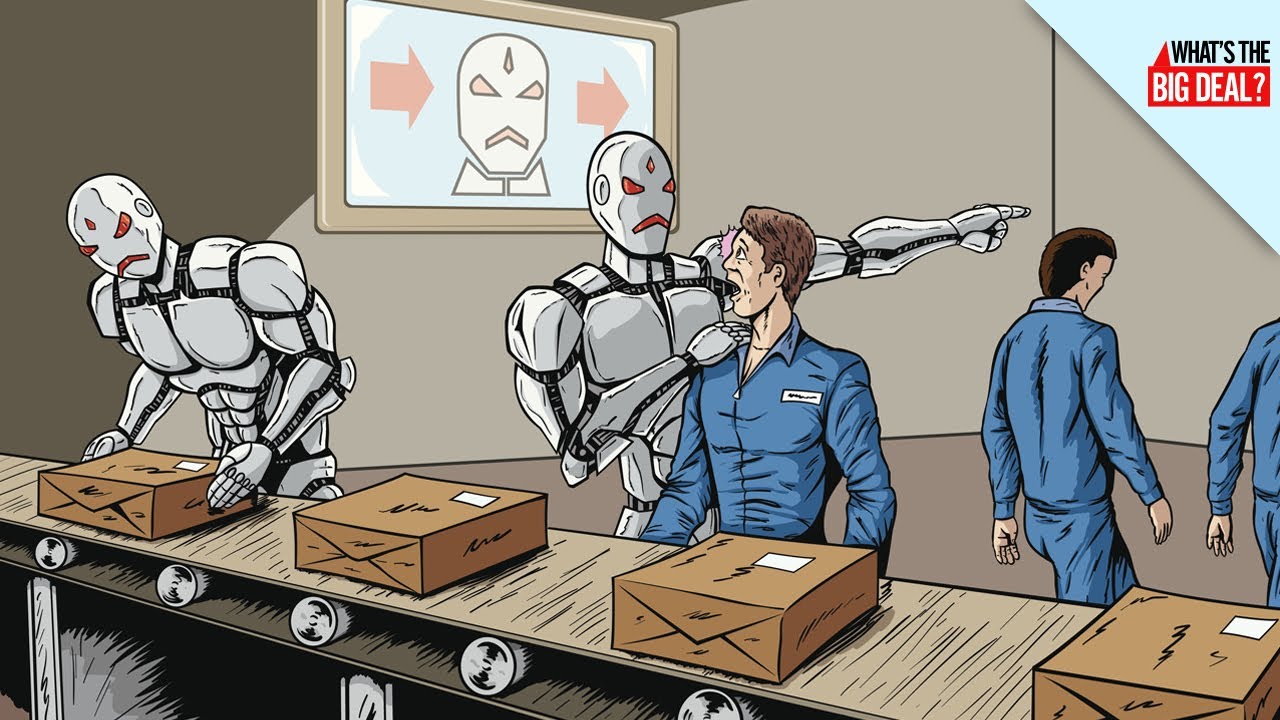
Researchers predict in about 15 years many jobs/or profession will be obsolete. there will be about 200 profession we never heard of as well.

Jobs with 99% chance of being automated‚ included data capturers‚ new accounts clerks‚ cargo agents‚ watch repairers‚ insurance underwriters‚ hand-sewers‚ telemarketers and tax preparers. Umpires‚ legal secretaries and couriers also stood little chance of surviving. Undergoing training and obtaining two or three certificates is not enough to be ready for tomorrow. Learning and developing competencies has to be continuous . Education is expanding beyond academic and vocational establishments, which is manifested in the emergence of public online courses, some of them offered by leading world universities.

There are some jobs that have only a 0.35% chance or less of being automated because “many of them require a level of human interaction that may take many more years for computer programs to replicate”.

Choreographers‚ psychologists‚ human resources managers‚ anthropologists‚ archaeologists‚ sales managers and CEOs are safe. Other sustainable jobs to be in or study towards include recreational therapists‚ audiologists‚ occupational therapists‚ healthcare social workers‚ orthotists and prosthetists‚ mental health and substance abuse social workers‚ emergency management directors, and first-line supervisors of mechanics‚ installers and repairers.

JOBS OF THE FUTURE

BIOTECHNOLOGY
System biotechnologist
Living system architect
Urban ecologist
Park ecologist
Biopharmacologist
HEALTHCARE
Medical data manager
Medical equipment designer
Bioethicist
Genetic consultant
Bioinformatician
Medical Marketing Expert
R&D manager in healthcare
Molecular nutrition expert
Medical robot operator
Gene therapy expert
Robotic prosthesis and implant
designer
Tissue engineer
Medical institution life cycle
designer
Personalized healthcare expert
Healthy old age consultant
Online doctor
Inter-sector
communication
Project
management
Lean production
Programming / Robotics /
Artificial Intelligence
Client focus
Multilingual and
multicultural abilities
Interpersonal skills
Environmentally
conscious thinking
Ability to work under
uncertainty
Artistic skills
Systems thinking
AGRICULTURE
Agricultural informatics and
engineering expert
GMO farmer
City farmer
Automated farming equipment
operator
Agricultural ecologist
Agricultural economist
ENERGY GENERATION
AND STORAGE
Power generation system upgrade
manager
Micro generation system designer
Weather expert in power industry
Recuperation system designer
Local power supply system
specialist
Wearable power device designer
Energy storage device designer
POWER GRIDS
AND POWER MANAGEMENT
Power marketing expert
Electricity consumer rights expert
Energy auditor
Power consumption system
designer
System engineer for smart power
grids
Electric vehicle charging station
operator
Power grid adjuster/controller
in distributed generation
Inter-sector
communication
Project
management
Lean production
Programming / Robotics /
Artificial Intelligence
Client focus
Multilingual and
multicultural abilities
Interpersonal skills
Environmentally
conscious thinking
Ability to work under
uncertainty
Artistic skills
Systems thinking
ROAD TRANSPORT
Automated transportation system
operator
Transportation network safety
engineer
Cross-logistics operator
Intermodal hub designer
Intermodal transport technician
Smart road builder
Designer of composite structures
for vehicles
High-speed railway designer
Smart management system
architect
WATER TRANSPORT
Port ecologist
Marine infrastructure system
engineer
Arctic navigation specialist
AVIATION
Unmanned flight interface
designer
Small aircraft production engineer
Operating data analyst
Aircraft recycling technologist
Airship designer
Airship infrastructure designer
Dynamic control smart
management system designer
Inter-sector
communication
Project
management
Lean production
Programming / Robotics /
Artificial Intelligence
Client focus
Multilingual and
multicultural abilities
Interpersonal skills
Environmentally
conscious thinking
Ability to work under
uncertainty
Artistic skills
Systems thinking
SPACE
Space structure designer
Space travel manager
Life support system engineer
Space road engineer
Space biologist
Space geologist
ADVANCED MATERIALS
AND NANOECHNOLOGY
Glass engineer
Recycling technologist
System engineer of composite
materials
Nanomaterial designer
Smart environment designer
Safety engineer in nano industry
IT SECTOR
Information systems architect
Interface designer
Online lawyer
Neural interface designer
IT preacher
Digital linguist
Big Data model designer
IT auditor
Information security supervisor
Personal profile security advisor
Smart environment cyber
technician
Cyber detective
MINING AND PROCESSING OF
MINERAL RESOURCES
Mining system engineer
Environmental analyst in mining
industries
Robotic system engineer
Unmanned exploration aircraft
operator
Distributed mining team
coordinator
Telemetric data interpretation
engineer
CONSTRUCTION
Specialist in old structure
renovation/reinforcement
Zero energy house architect
Construction technology upgrade
specialist
Smart house infrastructure
Foreman watcher
3D printing designer in
construction
BIM manager designer
Accessible environment designer
Environmental analyst in
construction
ROBOTICS AND MECHANICAL
ENGINEERING
Multi-purpose robotic systems
designer
Ergonomic designer
Composite engineer
Household robot designer
Children’s robot designer
Designer of neural interfaces for
robot control
Medical robot designer


FINANCIAL SECTOR

Intellectual property appraiser

Personal pension plan designer

Multicurrency translator
Crowd funding and crowd
investing platform manager
Direct talent investment fund
manager
MANAGEMENT
Time broker
Time manager
Production coordinator in
distributed communities
Environment auditor
Trend watcher / foresighter
Virtual lawyer
Corporate venture fund portfolio
manager
Corporate anthropologist
Community development plan coordinator
Personal brand manager
Cross-cultural communication
manager
User community moderator
Online sales manager
Individual financial trajectory designer
SOCIAL SECTOR
Crowd sourcing expert for social
issues
Government authority
communication platform
moderator
Social conflict mediator
Environmental counselor
Personal charity platform
moderator
State-private partnership
specialist for the social sector
Social worker for disabled
persons adaptation using internet
technology
Migrant adaptation specialist
EDUCATION
Moderator
Academic path designer
Tutor
Project training organizer
Educational online platform
coordinator
Startup mentor
Ecopreacher
Game master
Game educator
Mind fitness coach
Designer of consciousness train
CHILDREN’S PRODUCTS
AND SERVICES
Transmedia product designer
Children’s R&D manager
Children’s future image expert
Children’s psychological security
specialist
MEDIA AND ENTERTAINMENT
Content aggregator editor
Info stylist
Semantic field producer
Media software designer
Media policeman
Virtual reality architect
Virtual world designer
Game practitioner
TOURISM AND HOSPITALITY
Individual tour director
Space brand manager
Augmented reality area designer
Robot attendant
Territory architect
Smart travel system designer
SECURITY
Integrated industrial security
auditor
Remote security coordinator
Ergonomic designer of wearable
security devices
Expert for mitigating systemic
environmental disasters
Personal security designer
BIOPHARMACOLOGIST
URBAN ECOLOGIST

BIOTECHNOLOGY

LIVING SYSTEMS
DESIGNER
MEDICAL DATA MANAGER
GENETIC
CONSULTANT

Wearable Chairs

lexsituation35.jpg

Company called Astride Bionix has launched a relatively low-cost wearable chair. The device, which is like a pair of kickstands for the human body, enables the wearer to squat and take a comfortable seat anywhere. Another company called Ofrees sells a $900 consumer wearable chair on Amazon. Robotics company Cyberdyne makes an assistive back brace that functions similarly to wearable chairs and has been trialed in airports in Japan


People Were Surveyed & Here’s What They Want

Snapshotlightman5_001

More than 60 per cent of consumers would like earphones that translate languages in real time. About half want the technology to block out a family member’s snoring.

Half of the consumers surveyed said Artificial Intelligence would be useful to check facts posted on social networks.

More than 80 per cent believe that in only five years, long-lasting batteries will put an end to charging concerns, according to the report.

40 percent would like a robot that works and earns income for them, freeing up leisure time, according to the Ericsson consumer trends report for 2018 and beyond.

375 Million May Be Hunting For Employment When Automation Kicks In

Snapshotlightman5_001

By 2030 up to 30% of the hours worked globally could be automated. According to a new report by the McKinsey Global Institute  researchers estimate that between 400 million and 800 million people could find themselves displaced by automation and in need of new jobs, depending on how quickly new technologies are adopted. Of this group, as many as 375 million people—about 14% of the global workforce—may need to completely switch occupational categories and learn a new set of skills to find work.

Number of workers needing to find new jobs due to automation


business suit3_001

AI technologies like speech analytics, deep-learning platforms and natural language generation have exploded onto the scene in the past 12 months. Soon firms will be able to automate and scale in a more efficient way because software will ultimately be able to learn and adapt rather than require programming.

Automation will transform the workforce as technology advances result in humans increasingly working side by side with software robots These robots don’t herald a gloomy future for jobs. As we showed in our report. Working Side By Side With Robots, automation will replace some jobs and create others, with a net loss of 9.8 million US jobs by 2027 — while transforming at least 25 percent of the remaining jobs.

SONY To Launch Robotic Dog

The robotic dog will feature a bevy of sensors including a camera embedded in the nose, and will go on sale in Japan on Jan. 11 for 198,000 yen ($1,750), excluding tax, plus at least 90,000 yen for a three-year data plan,

Robotic Lawyers On The Rise

Snapshotmensuit6_001

The list of occupations that will be decimated by artificial intelligence and automation is becoming larger and larger with drivers, translators and shop assistants under threat from the rise of the robots,.Now you can add lawyers to the list.

A contest that took place last month pitched over 100 lawyers from many of London’s ritziest firms against an artificial intelligence program called Case Cruncher Alpha.

Both the humans and the AI were given the basic facts of hundreds of PPI (payment protection insurance) and asked to predict whether the Financial Ombudsman would allow a claim.

In all, they submitted 775 predictions and the computer won hands down, with Case Cruncher getting an accuracy rate of 86.6%, compared with 66.3% for the lawyers.

Case Cruncher is not the product of a tech giant but the brainchild of four Cambridge law students. They started out with a simple chatbot that answered legal questions – a bit of a gimmick but it caught on.

Two judges oversaw the competition, Cambridge law lecturer Felix Steffek and Ian Dodd from a company called Prediction, which runs one of the world’s biggest databases of legal cases. He says the youthful Case Cruncher team chose the subject for the contest well.

Ian Dodd thinks AI may replace some of the grunt work done by junior lawyers and paralegals but no machine can talk to a client or argue in front of a High Court judge. He puts it simply: “The knowledge jobs will go, the wisdom jobs will stay.”

Robotic Buddhist Priests Being Used For Funerals In Japan

Buddhist priest for a funeral cost about $2,200 in Japan. So a plastic molding company Nissei Eco Co. decided to  create a robotic Buddhist priest. Nissei has modified an existing robot in the form of SoftBank’s Pepper robot. The Buddhist Pepper robot is going to be around $450 per funeral.

Whats Next?

Biomedicine: They’re Analyzing Your DNA

cand26_001

23andMe

23andMe first debuted direct-to-consumer tests meant to predict disease in 2013, but the U.S. Food and Drug Administration quickly clamped down on that and told the company to stop marketing the tests, saying they could be inaccurate and confusing to consumers.

However, the company was vindicated earlier this year when the FDA revised that decision, declaring 23andMe could sell tests that estimate customers’ risk of certain disease, as long as they don’t purport to diagnose any disease.

Illumina

Early this year, Illumina, the manufacturer of most of the world’s DNA sequencers, unveiled its newest, most efficient machine, NovaSeq, which can sequence as many as 48 entire human genomes in two and a half days, according to the company. Illumina claims the ultra-fast machine will usher in the $100 genome and will open the door for researchers to cheaply sequence DNA in search of rare genetic variants that cause disease.

Sophia Genetics

Sophia Genetics is taking a big-data approach to DNA. The Swiss company is using AI algorithms to continuously learn from thousands of patients’ genomic data. Partnering hospitals take patient samples and run them through a DNA sequencer. The Sophia system sifts through that genetic information to identify mutations in a patient’s genome. The technology is said to quickly and more accurately diagnose conditions like cancer, metabolic disorders, and heart disease.

LightStrike Germ-Zapping Robot Can Eliminated Hospital Germs


Hospitals around the world are constantly for new and innovative ways to battle deadly pathogens and kill multidrug resistant organisms that can cause hospital-acquired infections (HAI).

Saint Peter’s University Hospital has implemented a LightStrike Germ-Zapping Robot that emits waves of ultraviolet (UV) light to destroy hard-to-kill bugs in hard-to-clean places.

Their goal is to prevent infection & provide a clean, safe environment for their patients,  families and employees. The latest technology provides an added level of protection in combating HAI’s caused by pathogens such as Clostridium difficile and Staphylococcus aureus.

The Xenex robot is a new technology that uses pulsed xenon, a high-intensity UV light that penetrates the cell walls of microorganisms, including bacteria, viruses, mold, fungus and spores. Their DNA is fused, rendering them unable to reproduce or mutate, effectively killing them on surfaces without contact or chemicals.

The system is effective against even the most dangerous pathogens, including Clostridium difficile (C. diff), norovirus, influenza, Ebola and methicillin-resistant Staphylococcus aureus, better known as MRSA. Over 400 hospitals, Veterans Affairs and Department of Defense facilities in the U.S., Canada, Africa, Japan and Europe are using Xenex robots, which are also in use in skilled nursing facilities, ambulatory surgery centers, and long-term acute-care facilities.

Walmart’s Patent To Track Shoppers Emotions

cand16_002

Walmart, is seeking ways to identify whether a customer is unhappy or dissatisfied, and then sending staff in to deal with them before they are able to register a complaint. Walmart is using video cameras at store checkout lines that monitor customers’ facial expressions and movements to try and identify varying levels of dissatisfaction, according to a patent filing. According to their patent filing,Walmart will not only use the data to address immediate staffing needs. It will also use the technology to analyze trends in shoppers’ purchase behavior over time.

If the system detects an unhappy customer, it will ping employees in other parts of the store and order them to report to a checkout register, in the hopes of alleviating shoppers’ distress. Walmart is hoping that the technology will enable stores to respond more efficiently to customer service issues before shoppers have a chance to complain.


ISS—International Space Station

space fans can now explore every inch of the ISS to get a better look at what the last 16 years of construction have achieved. There are modules for science and engineering, sleeping quarters and a series of windows with a unique view of the world, all available for anyone to look at.


Robotics Team From Burundi Missing

TEAM BURUNDI

The D.C. Police Department identified the missing teens on Twitter as: Audrey Mwamikazi, 17; Aristide Irambona, 18; Kevin Sabumukiza, 17; Don Ingabire, 16; Nice Munezero, 17; and Richard Irakoze, 18.

The robotics competition, is designed to encourage youths to pursue careers in math and science, and have attracted teams of teenagers from more than 150 nations. 

Competition organizers say they learned Tuesday night that the team’s mentor could not find the students. FIRST Global President Joe Sestak made the initial call to police, according to a statement issued Thursday. Two of the teens were seen crossing into Canada, D.C. police say. The members of the robotics team from the eastern African country of Burundi, who are 16, 17 and 18, disappeared Tuesday after they took part in the FIRST Global Challenge robotics competition. 

The Metropolitan Police Department has received reports that Audrey Mwamikazi, 17, and Don Ingabire, 16, were seen crossing into Canada, spokeswoman Aquita Brown said Thursday morning.

Police say they have no indication of foul play in their disappearance. No additional details were released immediately. The team’s mentor said they disappeared after the competition. He said he did not know where they went. The mentor told police the teens have one-year visas to stay in the U.S. 

Police Department Upstate New York Has Drones

cornbraids6_001

Western New York police department has purchased a drone for $9,994.99.

It will be flying the skies of West Seneca to help officers solve crimes and keep the community safe. The grant was secured by State Senator Patrick Gallivan.

West Seneca Police have been training for eight months on how to use this new technology, which officers say will assist in many different police missions including search and rescues, creek levels during flooding and crime scene analysis.

The drone is equipped to drop items to those in need, such as a during a hostage situation. They can put a cell phone in it for delivery to someone in need, during a hostage situation which will help our hostage negotiators maintain communication with them.The drone can travel up to 400 feet high, with a speed up to 50 miles per hour, with a rotating camera that captures video from all angles.

The drone also can give the investigators an indicator of where a fire started,” according to Lt. McNamara. “Accident investigation, that can be used to show the weather conditions at the time of an accident.”

The department is ready to start flying, but is waiting for final approval from the Federal Aviation Administration to use the drone at night.

Internet of Things & Smart Cities

snapshot_139

Atlanta, like other metro centers, is striving to become a “smart city” via the latest technological innovations. However, with some of the city’s infrastructure over 100 years old, it faces challenges that planners hope to resolve through an integrated technology approach. To date, Atlanta has implemented numerous newer and emerging technologies as part of its smart initiative. These include environmental sensors, video analytics, artificial intelligence, data analytics, real-time situational awareness tools, big data management, traffic management tools, smart lighting, and smart waste management. The city has planned deployments of technologies including radar detection, dedicated short-range communications, autonomous vehicles, and connected vehicle systems.

Voice Imitation & Fake Videos ?


coco7_001

Just imagine a world where anyone could create a photo-realistic and make who ever they want to say whatever they want. Add to that the ability to write a script and have a machine recite it back with the perfectly indistinguishable intonation of the person featured. Well it’s here!

A Montreal-based AI startup has recently revealed a new voice imitation technology that could signal the end of trusting your ears, meaning pretty soon there could be a cloud of doubt over literally every “recording” you see and hear.

Three PhD students at the University of Montreal developed Lyrebird, a deep learning algorithm that reportedly needs only a 60-second sample of a person’s voice to be able to generate a synthesized copy. While the company touts applications such as speech synthesis for people with disabilities, it’s clear this technology is opening a Pandora’s box of future complications.

Lyrebird has a dedicated “Ethics” page on its website, openly discussing the potentially dangerous consequences of the technology. The company intends to release the technology publicly and make it available to anyone, with the idea being that demonstrating so visibly how voices can be artificially faked. We will all learn to become skeptical of audio recordings we hear in the future. Everyone will learn to become skeptical of audio recordings we hear in the future.

Adobe revealed aproject in late 2016 called VoCo.


Will Robots Take Your Job?

Snapshotpinktop_001

Designed and developed by Dimitar Raykov and Mubashar Iqbal, uses data from the 2013 report, “The Future of Employment: How susceptible are jobs to computerisation?” as well as data from the Bureau of Labor. The researchers for that study estimated 47 percent of total US employment is at risk of automation.

You can search for your own gig (reporters and correspondents are at an 11 percent risk of automation, or hit the randomized button to see an example from their database (metal and plastic pattern makers are at 90 percent risk). Alongside the risk percentage are projected growth rates in the next seven years, the amount of people sharing that job title as of 2016, and median annual wage.

Sorry To say data reveals positions such as Bank Tellers, Postal Clerks, Office Clerks, Cashiers,Retail sales person are about 96% doomed. Librarians 65% Train Operators 86% Dispatchers except Police Fire 3ll

Click Here To Find If Robots Will Take Your Job

Map Tells Which Cities Likely To Lose Jobs To Robots

As the map shows, almost all large metropolitan areas can lose over 55% of their current jobs due to automation. The ones that fare better than others include high-tech centers like Silicon Valley and Boston.

Lower income jobs face higher automation risk, the effect on employment will be much more drastic than the effect on wages. MSAs with a high share of low paying jobs will have larger job and wage losses. The researchers emphasize that probability of automation does not equal future unemployment rates: “Technical feasibility does not imply that automation necessarily makes economic sense. And historically, automation went hand in hand with new job creation both in skilled and less skilled labor,” explains Dr. Chen. “However, the speed and the high share of automation in less skilled jobs raises many questions about whether the economy will be able to make up for the expected job losses. They expect that automation will create winners and losers among cities and regions of the U.S.,

Metropolitan Statistical Area Share of Jobs Automatable
1 Las Vegas-Henderson-Paradise, NV 65.2%
2 El Paso, TX 63.9%
3 Riverside-San Bernardino-Ontario, CA 62.6%
4 Greensboro-High Point, NC 62.5%
5 North Port-Sarasota- Bradenton, FL 62.4%
6 Bakersfield, CA 62.4%
7 Orlando-Kissimmee-Sanford, FL 61.8%
8 Fresno, CA 61.5%
9 Greenville-Anderson-Mauldin, SC 61.3%
10 Louisville/Jefferson County, KY-IN 61.3%

They Say Tm Cook’s 1 Billion Investment Will Bring Robot Jobs Not Factory Jobs

white sailor suit_001.png3_001

Apple just promised $1 billion boost to US manufacturing  Wednesday, 3 May 2017 | 6:57 PM ET | 01:07

Apple CEO Tim Cook said that his company will start a $1 billion fund to promote advanced manufacturing jobs in the United States.

Apple hasn’t released much in the way of details about its plans for the investment, saying only that the first beneficiary will be announced later this month. Advanced manufacturing is a large umbrella term that includes everything from 3-D printing aerospace components to installing robots on assembly lines.

The fund comes as President Donald Trump has made bringing back manufacturing jobs a big part of his agenda. As advanced manufacturing jobs are in high demand in the U.S., the sector was already high on Apple’s list of priorities, and Cook hopes the investment will spur even more job creation.

Office Workers @ Stockholm Sweden’s Epicenter Choose To Be Microchipped

blacktop3_001

Many of the workers at the Epicenter in Stockholm Sweden have chosen to be voluntarily chipped with RFID implants in their hands. Epicenter members can unlock doors, access printers, and pay at vending machines without having to fumble for cash or a card. Most of the nearly 1,000 members still use traditional means, but a healthy handful has opted to volunteer.

Epicenter is part of a movement to construct office space of the future. Members are encouraged to participate in over 100 annual events, from workshops on biohacking to concerts. Long distance calls can be taken through telepresence robots that roam around the corridors. A “robotic” vending machine makes fresh fruit smoothies on demand. There’s even a “biohacker breakfast” that consists of bulletproof coffee and a pair of boiled eggs.

Their goal is to make the workplace a place for play as well as productivity and experimentation and to push forward as early adopters of untested technology.

Epicenter is founded by a group of guys who used to run big tech conferences, and one of their visions for epicenter is that it will be like a big tech conference on a daily basis. Every A Chip & Beer, a meet-up is held monthly, where members can come get implants and sip libations. (Alcohol thins blood, so it’s best to start with the implant.)

France gives employees the right to disconnect as soon as they step out of the office, there’s something suspect about Epicenter members quite literally taking their work home with them, even though these chips can be used far beyond the office – as membership IDs for gym chains and supercenters, and to pay for goods at small shops all around Sweden .

Biometric monitoring of employees continues to be a growing trend, the widespread use of these new technologies remains rare due to privacy and legal concerns. Privacy issues prevent many companies from instituting biometric IDs simply because — like anything else — they pose a hacking risk, too. 

They say the benefits range from accounting for employees in emergency situations to protecting employees and employers from unfounded complaints.

The Cons no more Privacy, Those with something to hide well BEWARE! Big Brother Is Coming Soon

Food Delivery via Six Wheeled Robots

blue3_001

Starship Technologies announced the first two commercial partnerships for its ground-based delivery robots. DoorDash in Redwood City, California, and Postmates in Washington, DC. The commercial trials will see these services start making deliveries in the coming weeks using Starship’s six-wheeled robots within a four-mile-wide test area in each city.

The DoorDash trial will take place in Redwood City’s downtown business district, and Starship will run its Postmates pilot in the northwestern part of Washington, DC’s city limits.

Companies, like Amazon and Alphabet, have made a few airborne drone deliveries in the US thanks to early partnerships with businesses like 7-Eleven and Chipotle.

Mark Zuckerberg’s Robot Jarvis

Over the last year, though, Zuckerberg has spent between 100 and 150 hours on his home project. Zuckerberg’s project consist of coding with the creation of Jarvis. Morgan Freeman is the voice of Jarvis. Zuckerberg and his wife Priscilla Chan use a custom iPhone app or a Facebook Messenger bot to turn lights on and off, play music based on personal tastes, open the front gate for friends, make toast, and even wake up their one-year-old daughter Max with Mandarin lessons.

More Here


The White house Report On Artificial Intelligence & America’s Employees

purple-sweater2_002

The White House released a new report this week entitled Artificial Intelligence, Automation, and the Economy, as part of an admirable but very flawed initiative to understand the impact of the new technology on American employees.

The White House said, “Accelerating AI capabilities will enable automation of some tasks that have long required human labor”. The report says some low wage jobs will become obsolete. Research consistently finds that the jobs that are threatened by automation are highly concentrated among lower-paid, lower-skilled, and less-educated workers. This means that automation will continue to put downward pressure on demand for this group, putting downward pressure on wages and upward pressure on inequality.  Robots are taking orders and making food; customers are growing accustomed to the lack of human interaction.

These transformations will open up new opportunities for individuals, the economy, and society, on the other hand, has the potential to disrupt the current livelihoods of millions of Americans. Whether AI leads to unemployment and increases in inequality over the long-run depends not only on the technology itself but also on the institutions and policies that are in place. 

The advent of computers and the Internet raised the relative productivity of higher skilled workers. Routine-intensive occupations that focused on predictable, easily-programmable tasks—such as switchboard operators, filing clerks, travel agents, and assembly line workers— were particularly vulnerable to replacement by new technologies. Some occupations were virtually eliminated and demand for others reduced. Research suggests that technological innovation over this period increased the productivity of those engaged in abstract thinking, creative tasks, and problem-solving and was therefore at least partially responsible for the substantial growth in jobs employing such traits. Shifting demand towards more skilled labor raised the relative pay of this group, contributing to rising inequality. AI is not a single technology, but rather a collection of technologies that are applied to specific tasks, the effects of AI will be felt unevenly through the economy. Some tasks will be more easily automated than others, and some jobs will be affected more than others—both negatively and positively. Some jobs may be automated away, while for others, AI-driven automation will make many workers more productive and increase demand for certain skills. Finally, new jobs are likely to be directly created in areas such as the development and supervision of AI as well as indirectly created in a range of areas throughout the economy as higher incomes lead to expanded demand. Recent research suggests that the effects of AI on the labor market in the near term will continue the trend that computerization and communication innovations have driven in recent decades. Researchers’ estimates on the scale of threatened jobs over the next decade or two range from 9 to 47 percent.

The report suggests three broad strategies for addressing the impacts of AI-driven automation across the whole U.S. economy:

  1. Invest in and develop AI for its many benefits;
  2. Educate and train Americans for jobs of the future; and
  3. Aid workers in the transition and empower workers to ensure broadly shared growth.


7 Eleven Says It Used Drones For Delivery Before Amazon

Snapshot125_001

7-Eleven would like to reminded the world that it had already completed 77 drone delivery flights a month before Amazon completed its first one last week. 7-Eleven’s unmanned aerial deliveries are powered by a startup called Flirtey, which bills itself as the “world’s leader in the drone delivery industry. 12 shoppers were invited to participate in a trial. They ordered items via a smartphone app for a drone to drop off at their houses, and the merchandise included everything from hot and cold food items to over-the-counter medicines. Deliveries were completed an average of less than less than 10 minutes after the orders were placed, Flirtey says. Instead of landing on the customer’s lawn or roof, the drones hovered in place while lowering their payloads to the buyers. The 77 delivery flights were completed on weekends in November, and the company intends to continue flying 7-Eleven deliveries in 2017.

Flirtey Drone Close-Up

Is Your Fitness Tracker & Other Devices Safe?

knickers4_001

Identify theft, data leaks, discrimination from employers and increasing insurance costs are just some of the fallout predicted from the rise of wearable technology.
The use of trackers, smart watches, Internet-connected clothing, and other wearables becomes more widespread, and as their functionalities become even more sophisticated, the extent and nature of data collection will be unprecedented

These data can, in turn, be combined with personal information from other sources— including health-care providers and drug companies—raising such potential harms as discriminatory profiling, manipulative marketing, and data breaches.

According to the Health and Human Services’ Office of Civil Rights in Washington DC records that there were 253 health-care breaches across the United States in 2015 that affected 500 individuals or more, resulting in a combined loss of over 112 million records.

‘The opportunities for data breaches will increase, with hackers accessing medical and health information at insurance companies, retail chains, and other businesses

white sailor suit_001.png3_001

Identify theft, data leaks, discrimination from employers and increasing insurance costs are just some of the fallout predicted from the rise of wearable technology. A few different kinds of fitness tracker are shown


Children’s Connected Toys May Breach Security

purple-sweater3_001

Many people don’t realize that buying a wearable, baby monitor or a WiFi connectable toy, that they are in fact, potentially exposing themselves to being hacked by e-criminals. Just last week, a complaint was lodged with the US Federal Trade Commission over internet-connected toys recording and transmitting kids’ conversations in violation of privacy rules. In the past few years, many baby monitors have also been reported for hacks, the latest one in the US with a hacker directly spying and talking to the toddler though the monitor.

The average Australian households now have nine internet-connected devices. With Christmas just around the corner many people are going out to buy the latest piece of technology for their friends and family members, while getting the person what they want, they are also potentially exposing them to security issues. Any device that can be connected to the internet, has a Bluetooth signal, or be controlled remotely has a risk of being hacked.

What can you do about it?

  1.  You can lengthen passwords, changing letters to numbers, include a capital letter, not re-using the same password over and over
  2. Before purchasing a new device for yourself or giving one to another person is searching the name of the device with the keywords ‘hack’, ‘glitch’ or ‘scam’ and seeing what results come up.
  3. Ensure that before agreeing to any terms of service or allowing apps or programs access to data on your phone you should carefully read through what data they would need access to, and whether they agree to not give provide your data to a third party. This would at least ensure that your data goes no further.
  4. When giving a new device to your children, make sure that you check what permissions the app wants access to as sometimes an app can request access to things such as your home address, phone number, bank account details and general information that about your private lives.


More Workplace Trends: Perks & Gig Economy Will slow Down

snapshotleatherpurple5_001

According to Glassdoor research sixty seven percent of U.S. employees said they were not likely to apply for a job at a company where men and women were paid unequally for the same work.

Boston Consulting Group says that by 2025, up to a quarter of jobs will be replaced by either smart software or robots, and a study from Oxford University reveals that 35% of existing U.K. jobs are at risk of automation in the next 20 years.

Tom Davenport and Julia Kirby have researched and wrote a book on this subject called Only Humans Need Apply: Winners and Losers In the Age of Smart Machines. Their bottom line is this: machines are less likely to displace entire jobs, but will more likely replace specific tasks and in the process will augment many jobs.

Jobs Will Be Impacted by Intelligent Technologies

.  Presently journalist can tap into algorithms from two firms called Narrative Science and Automated Insights, that use machine learning to write an article in a matter of seconds. The journalist then can focus on writing a more strategic view of the article. In other words, leverage the technology to do what it does best and re-frame the article to a more analytical level.

Wealth advisors are already seeing the power of Analytix Insights, a company that creates investment analytic narratives on more than 40,00 public companies.The job of a wealth advisor is already automated, the critical part of advising clients, establishing trust, and providing personalized expertise is the opportunity for wealth advisors to enhance their skill sets.

The proliferation of automated teller machines has actually led to slightly more bank tellers, due to both bank deregulation and job augmentation as bank tellers now reduce their time on cash handling responsibilities and can be trained to provide relationship based services to bank customers.

Samsung Galaxy 8 Will Have An Artificial Intelligence Assistant

brown & beige5_001

 Tech giant Samsung revealed that the upcoming Galaxy S8 will include an AI assistant as one of its star attractions. It’s not offering clues as to what this virtual helper will do, but it will let developers “attach and upload services” to extend the AI’s functionality beyond what you get out of the box. This is similar to what Apple and Google are offering for their own assistants, but it may be what Samsung isn’t talking about that’s special — Viv can create its own programs and understand complex intent in a way many AIs can’t. Samsung aquired Viv an artificial intelligence platform from the makers of Siri.


Don’t Feel Like Standing?

The Robotic Lawyer


caramel7_001

The UK-based DoNotPay chatbot has extended its services into New York in March 2016, and successfully challenged 160,000 of 250,000 parking fines over a 21-month period. The free online program asks people a series of questions to work out whether an appeal is viable, and then guides the user through the appeals process. The DoNotPay program is also able to navigate compensation for delayed flights.

China’s New Robo Cop

Snapshot_143

https://i0.wp.com/techworm.vijayprabhu.netdna-cdn.com/wp-content/uploads/2016/09/dalek_on_patrol.jpg

China had unveiled a robotic crime fighter known as the AnBot at the Chongqing International Tech Fair this April. This was developed by the National Defense University to enhance the country’s anti-terrorism and anti-riot measures. The droid will patrol the departure hall of terminal three of the airport, reports the People’s Daily Online. The robot is to help relieve the pressure off airport police in their daily patrols and save human resources. AnBot can work around-the-clock and deter suspects with sound and light, and react to emergencies with an electric riot fork. The security robot is equipped with four high-definition digital cameras, which it can use to snap pictures of travellers’ faces, and then send them immediately to human co-workers for further analysis. It is capable of autonomous patrols, intelligent monitoring and auto recharging.

Beauty Contest & AI


afro3_001

fushia3_001

capri6_001

cornbraids7_001

The Question:What if beauty pageant  judges were machines? A robot would ideally lack a human’s often harmful social biases. Beauty.ai is an initiative by the Russia and Hong Kong-based Youth Laboratories and supported by Microsoft and Nvidia, ran a beauty contest with 600,000 entrants, who sent in selfies from around the world—India, China, all over Africa, and the US. They had a set of three algorithms judge them based on their face’s symmetry, their wrinkles, and how young or old they looked for their age. The algorithms did not evaluate skin color.

The results: Out of the 44 people that the algorithms judged to be the most “attractive,” all of the finalists were white except for six who were Asian. Only one finalist had visibly dark skin. All three algorithms used a style of machine learning called “deep learning”.  aAlanguage processing algorithm was recently found to rate white names as more “pleasant” than black names, mirroring earlier psychology experiments on humans.

The Problem: The problem here is the lack of diversity of people and opinions in the databases used to train AI, which is created by humans. Also, the large majority (75 percent) of contest entrants were European and white. Seven percent were from India, and one percent were from the African continent. Camera film was originally designed to perform best with white skin in frame, for example, meaning that until the industry decided to correct the base issue, every camera demonstrated a racist bias even in the hands of ostensibly non-racist photographers.

Solution: Change the system, get some people of color trained in machine learning.

Beauty.ai

Algorithms To Measure Beauty?

afro4_001

blue3_001

The Question:What if beauty pageant  judges were machines? A robot would ideally lack a human’s often harmful social biases. Beauty.ai is an initiative by the Russia and Hong Kong-based Youth Laboratories and supported by Microsoft and Nvidia, ran a beauty contest with 600,000 entrants, who sent in selfies from around the world—India, China, all over Africa, and the US. They had a set of three algorithms judge them based on their face’s symmetry, their wrinkles, and how young or old they looked for their age. The algorithms did not evaluate skin color.

The results: Out of the 44 people that the algorithms judged to be the most “attractive,” all of the finalists were white except for six who were Asian. Only one finalist had visibly dark skin. All three algorithms used a style of machine learning called “deep learning”.  aAlanguage processing algorithm was recently found to rate white names as more “pleasant” than black names, mirroring earlier psychology experiments on humans.

The Problem: The problem here is the lack of diversity of people and opinions in the databases used to train AI, which is created by humans. Also, the large majority (75 percent) of contest entrants were European and white. Seven percent were from India, and one percent were from the African continent. Camera film was originally designed to perform best with white skin in frame, for example, meaning that until the industry decided to correct the base issue, every camera demonstrated a racist bias even in the hands of ostensibly non-racist photographers.

Solution: Change the system, get some people of color trained in machine learning.

Beauty.ai


The Future of Travel 2024


gold7_001

View The Skyscanner

Robots & The Travel Industry

gold7_001

A robot named Kanae, who hails from Japan, can be programmed to speak any language (including sign language). She has two sisters: Chihira Aico, who assists shoppers at the Tokyo shopping center, and Chihira Junko, who offers help at an info desk at Tokyo’s Aqua City Odaiba shopping mall. Bots in tourism signal an industry shift—Hilton Hotels, for example, announced on March 9 it was teaming up with IBM for a concierge robot named Naofor a concierge robot named Nao, while the SkyMax Skytender started mixing martinis on airplanes back in 2012.

More Here


Dallas Police & Use Of Robotics

 photo courtesy of Alexandre Dulaunoy
Dallas Police used a bomb disposal robot to kill a suspect after last night’s deadly shooting during a protest. In a press conference, Dallas police chief David Brown said that the robot was deployed after negotiations with the suspect failed. “We saw no other option but to use our bomb robot and place a device on its extension for it to detonate where the suspect was,” said Brown. “Other options would have exposed our officers to great danger. The suspect is deceased as a result of detonating the bomb.”

Drones Packing Insecticides

Snapshotnavy5_001

A company called Drone Volt has introduced the Drone Spray Hornet to locate and destroy the nests of Asian hornets that are becoming pests in parts of Europe.

The Asian Hornet is believed to have arrived in France in a shipment of pottery over a decade ago and has since spread itself over much of the country and other European regions. The predatory wasp preys on a variety of insects, including bees and other native pollinators. The species is also known to defend its nests by attacking perceived threats in swarms. Drone Volt collaborated with a beekeeper to develop a drone equipped with a tilting spray system and a Go Pro Hero 4 Black Edition HD camera to safely track down and eliminate the hornet nests.

President Obama Calling For Youth To Submit Ideas


U.S. President Barack Obama wants children to submit science and tech ideas for a new kid advisory committee he had formed.

AKA “Kid Science Advisors,” the program aims to hear out what child scientists and innovators all around the nation find interesting and what they think would be helpful for the future of science.The White House would like to listen to whatever these kids have in mind – It could be on something scientific or technological.

The idea to compose a kid scientist advisory came about the meeting of President Obama with a 9-year-old kid Jacob Leggette.

Leggette was able to create interesting materials such as a bubble-blowing wand and a miniature model of the White House, using a 3D printer. He got the chance to meet and show the President his works during the 6th White House Science Fair in April, when an ocean-energy probe made by a 14-year-old also impressed the President.

Leggette asked Obama about what he thinks of having kid scientists as advisors.

The U.S. leader was delighted with the idea so he suggested to create a kid advisory panel, which will be made up of children who can share their ideas on what is essential in the field of science and technology.


Inspired by a friend in Ethiopia, Hannah Herbst from Florida made an ocean-energy probe prototype, BEACON, designed to help developing countries have a power source using ocean currents. -The ninth-grader from the Florida Atlantic University High School previously presented the ocean-energy probe prototype in the Discovery Education 3M Young Scientist Challenge in 2015. Herbst won the challenge and was named America’s Top Young Scientist.

Japanese Robot Writes Novel & Almost Wins Prize

Snapshothybrid4_001

 A Japanese AI program has co-authored a short-form novel that passed the first round of screening for a national literary prize, it seems that no occupation is safe. The robot-written novel didn’t win the competition’s final prize, this time.

The novel is actually called The Day A Computer Writes A Novel, or “Konpyuta ga shosetsu wo kaku hi” in Japanese. Although the narrative did’nt win first prize at the third Nikkei Hoshi Shinichi Literary Award ceremony, however, it did come close.The novel was written by a very human team that led the AI program’s development. Hitoshi Matsubara and his team at Future University Hakodate in Japan selected words and sentences, and set parameters for construction before letting the AI “write” the novel autonomously. One of the team’s two submissions to the competition made it past the first round of screening, despite a blind reading policy that prevents judges from knowing whether an AI was involved in the writing process.

Read More

Bots Assisting In Hotels

American hotel multinational Hilton has teamed up with tech giant IBM to trial a robotic concierge powered by IBM’s AI software Watson.

The bots name is Connie after the chain’s founder, Conrad Hilton, and it is currently assisting residents at Hilton McLean hotel, in Virginia.Connie helps guests navigate around the hotel and find restaurants or tourist attractions in the area—but it is not able to check them in just yet.

Connie’s physical support is Nao, a French-made 58cm-tall android that has become the go-to platform for educational and customer care tasks, thanks to its relative affordability (about £6,000 or $9,000). But the concierge’s brain is based on IBM’s flagship AI program Watson—the Jeopardy!-winning system engineered to understand people’s questions and answer them in the best way possible.

In this case, Watson’s main role is natural language processing, which enables the bot to welcome guests, grasp their spoken queries, and answer accordingly. The information on local attractions and interesting sites is actually channelled from the database of travel platform WayBlazer, also an IBM’s partner. Connie is also designed to improve itself through interactions with human customers, learning from frequent queries how to fine-tune its recommendations.

Japan, the Hen-na Hotel has in fact whittled down its biological staff to only ten people, and is in general fully manned by robots, speaking both Japanese and English. The English-speaking concierge is, bafflingly, a velociraptor sporting a blue bowtie.

The Robotic Cook


TNL’s OneCook is a cooking robot that drops food from separate containers into a pot-like device and heats and stirs it. It follows the recipes on the accompanying app to get the timing right and has RFID technology so the onions get added before the garlic, for example. Creator Hanlin Hong says some meals can be ready in about five minutes. You can order meals, each under $10, from the app, or you can add your own ingredients and recipes to the dispensers and app.

Sereneti Cooki houses the trays for all the ingredients, and these trays flip over into the bowl at the recipe’s designated times. A robotic arm with a spatula-like utensil stirs the ingredients as an induction heater cooks the food.

Marines Ditches Googles Robo Dogs

corporate office2_001

The LS3 robot dogs created by Google-owned Boston Dynamics were created so they could be very useful dogs of war.However, these robo-dogs have one small problem: Like quite a few real dogs, they make too much noise and hence, “A loud robot that’s going to give away their position.”

The Robo Dogs were ditched before they had a chance to become regular members of battle squads.The whole project cost around $42 million and was a collaboration between Boston Dynamics and the Defense Advanced Research Projects Agency (DARPA). Boston Dynamics did make a smaller, quieter robo-animal, nicknamed Spot. The problem, however, is that Spot couldn’t carry much — around 40 lbs, or one-tenth of what the bigger versions could tote. Spot lacked the autonomous capabilities of the larger robo-animals, relying entirely on a human controller.

Hadrian Robot Can Build House In Two Days


Hadrian is expected to go into action next year

As robots get smarter, cheaper and more versatile, they’re taking on a growing number of challenges – and bricklaying can now be added to the list. Engineers in Perth, Australia, have created a fully working house-building machine that can create the brick framework of a property in just two days, working about 20 times faster than a human bricklayer.

The robot is named Hadrian (after Hadrian’s Wall in the UK), the robot has a top laying speed of 1,000 bricks per hour, which works out as the equivalent of about 150 homes a year. Of course there’s no need for the machine to sleep, eat or take tea breaks either, giving it another advantage over manual laborers.

At the heart of Hadrian is a 28 m (92 ft) articulated telescopic boom. Though mounted on an excavator , the finished version will sit on a truck, allowing it easier movement from place to place. The robot brick-layer uses information fed from a 3D CAD representation of the home for brick placement, with mortar or adhesive delivered under pressure to the head of the boom.

Fastbrick Robotics is now ready to launch the first commercial version of Hadrian at some point next year.

“The Hadrian reduces the overall construction time of a standard home by approximately six weeks,” Fastbrick Robotics CEO Mike Pivac told Gizmag. “Due to the high level of accuracy we achieve, most other components like kitchens and bathrooms and roof trusses can be manufactured in parallel and simply fitted as soon as the bricklaying is completed.”

Will  it take away brick laying jobs?

The machine will fill the void that exists due to shrinking numbers of available bricklayers, whose average age is now nearly 50 in Australia,” he says. “[Hadrian] should attract young people back to bricklaying, as robotics is seen as an attractive technology.


The Hadrian robot can lay up to 1,000 bricks per hour


Google Patents A Toy that They Say Is Evil

Snapshotmemorial day2015_002

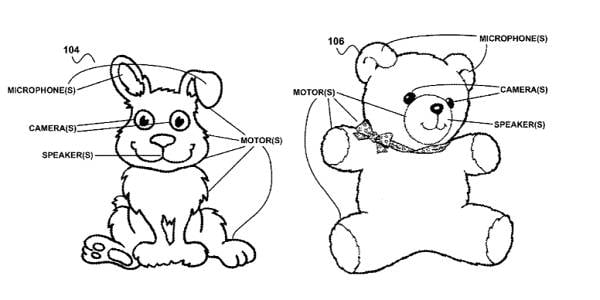
Google’s patent describes a toy that will look at and talk to your kids, then update a remote media device, depending upon the child’s feedback.The inventor of the evil robot is named as Richard Wayne DeVaul, whose job title is “director of rapid evaluation and mad science” at Google X. He works in a secret Google lab that may or may not be filled with roving robots, space elevators and talking refrigerators”. he also jumped ship from Apple to Google.

An anthropomorphic device, perhaps in the form factor of a doll or toy, may be configured to control one or more media devices. Upon reception or a detection of a social cue, such as movement and/or a spoken word or phrase, the anthropomorphic device may aim its gaze at the source of the social cue.

In response to receiving a voice command, the anthropomorphic device may interpret the voice command and map it to a media device command. Then, the anthropomorphic device may transmit the media device command to a media device, instructing the media device to change state.

The patent suggests other forms the demon dolly could assume in order to lure a child into a false sense of security, noting it could take the form of a dragon or an alien.

Young children might find this attractive. However, individuals of all ages may find interacting with these anthropomorphic devices to be more natural than interacting with traditional types of user interfaces.

A patent filed earlier this year has raised ridiculous concerns that Google may be building a robot army. These robots may be loaded with distinctive personalities, which alarmists claim are designed to raise the youth of humanity once Google’s AI destroys all adults.

Google has not responded to The Register‘s inquiry about the integration of these distinct areas of research at the time of publication.

More Here

Robot Cracks Locks In Seconds

Hotel Opening In Japan To Be Staffed By Multilingual Robots

Snapshotroses1_001

A hotel will soon open in the Netherlands-themed Huis Ten Bosch amusement park in Nagasaki, Japan. It will have 72 rooms with fees starting at $60 per night. And it will be staffed by 10 humanoid robots.

The hotel’s blinking and “breathing” robots will be able to make eye contact, respond to body language, and speak fluent Chinese, Japanese, Korean, and English. They will check in guests, carry bags, make coffee, clean rooms, and deliver laundry.

How much do you tip a robot?

The robot staff will be assisting a human staff person for now. At a news conference in Japan, Huis Ten Bosch president Hideo Sawada said, “In the future, we’d like to have more than 90 percent of hotel services operated by robots. Guests will be able to unlock their rooms through facial recognition software, and radiation panels capable of detecting body heat will monitor and adjust room temperatures. The hotel is scheduled to open July 17, 2015.

First Robotic Competition 2015 KickOff

First Robotic Competition combines sport science and technology

Read More

Tag Cloud