Always Providing You With Ongoing Information

Posts tagged ‘email’

Yahoo Launches Website So You May Be Eligible For A Claim

Snapshot35_001

As USAToday reports, Yahoo has launched the website www.yahoodatabreachsettlement.com, where someone can go to make a claim. In order to be eligible for a claim, you need to have met the following requirements:

  • You had a Yahoo account between January 1, 2012, and December 31, 2016.
  • Here a “Yahoo account” means you had a Yahoo email, or you had a login at one of Yahoo’s sites, including Yahoo Finance, Yahoo Fantasy Sports, Flickr, or Tumblr.

Gmail Adding More Functionality To Its Right-Click Menu

snapshot41_020

Users can expect to see this by February 23 2019.

Idaho Inmates Hacked JPay Tablets For A Quarter Million Dollars In Credits,

Snapshotgreen dress4_001

Gmail’s Newest Features

Snapshotskirt4_001

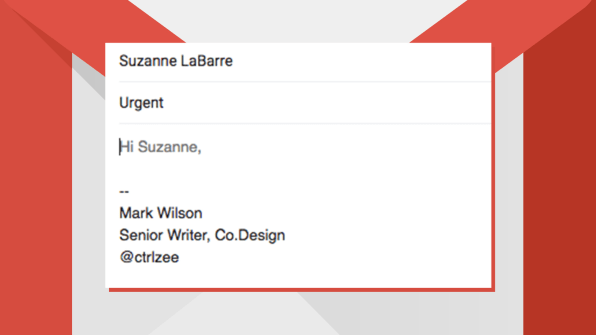
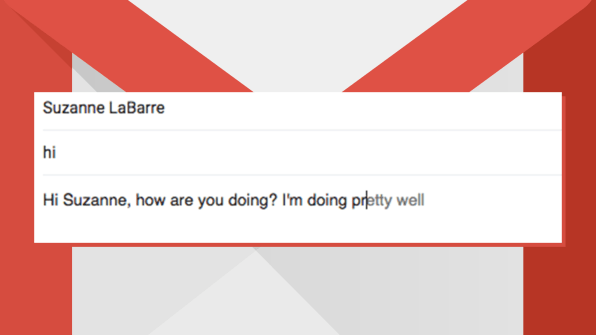
Google launched a new feature called Smart Compose that takes its AI writing much further. Smart Compose works a lot like Google’s own Autocomplete does in Search, popping up the things you might be about to say next. Simply by hitting tab, you can accept Google’s proposed words, add them to your copy, and move on to the next line of your email . . . for which Google might have even more suggestions.

To try it out, you’ll first need to turn on the “Enable experimental access” option within the General tab of the new Gmail’s settings. After you click the “Save Changes” button at the bottom of the screen, Gmail will refresh itself—and Smart Compose should then automatically be activated. You can confirm by going back into the General tab of the settings and looking for the newly added Smart Compose option. As long as “Writing suggestions on” is checked, you’re all set—and you should see Google’s predictive text show up periodically as you write new emails.

Google is very good at saying “hi”

[Source Image: Google]

Google is ready to schedule . . . perhaps to a fault

[Source Image: Google]

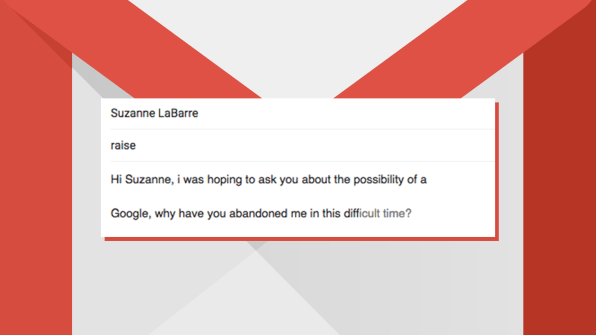
Google doesn’t seem interested in helping on serious topics

[Source Image: Google]
Click here for further assistance

Operation Wire Wire

Snapshotskirt4_001

 Department of Justice and the FBI—has announced a major coordinated law enforcement effort to disrupt international business e-mail compromise (BEC) schemes that are designed to intercept and hijack wire transfers from businesses and individuals.

Click here

Gmail’s New Feature Smart Compose

Image result for gmail

  Gmail has a new feature called Smart Compose. This feature allows for artificial intelligence to auto-fill information in the emails you compose in an effort to cut down on the time spent typing up mindless messages. If typing emails is truly one of the bane’s of your day-to-day existence, this feature is here to alleviate that stress. 

SUBJECT: Write emails faster with Smart Compose in Gmail

GMAIL Has A New Look

Snapshotfishnet8

Click On Gear icon top right to enable the new Gmail.

Google has not made this new Gmail default for everyone yet, so if you’re not seeing it, keep checking back. The rollout is supposed to be global for all 1.4 billion Gmail users.

Gmail New Design Coming Soon

Snapshotfishnet3_001

Those new features, in short, include:

  • A fresh, clean look for Gmail on the web.
  • Easy access to G Suite apps, such as Google Calendar, from within Gmail.
  • Smart Reply on the web, just like on mobile.
  • Ability to “snooze” emails and choose when they reappear in your inbox.
  • Offline support (native offline support in the new Gmail experience by June 2018)

Voters Consumed With Political Spam Messages

Snapshotleather3_002

Several campaigns have taken to aggressive, last-minute tactics — like blasting their constituency districts with spammy text messages.

ZDNet has seen reports and tweets of screenshots of text messages from several New York-based candidates in the past few days, pushing local residents to vote for a particular candidate or calling for campaign donations.


That drew ire from one local resident, who said the unsolicited message could influence how they would vote Tuesday.

For years, state and federal election candidates have used text messages as a way to solicit votes or contributions from their constituents. Use of text messaging first rocketed during the 2008 presidential campaign and has only escalated in size and scale — no more so than during last year’s election.

But the law is clear: it’s illegal for companies to send text messages to individuals who haven’t given prior consent.

Craig Engle, an attorney at Washington DC.-based law firm Arent Fox, said that the Telephone Consumer Protection Act protects consumers from receiving unsolicited political calls and texts to cell phones unless the sender has obtained prior consent.

But there’s a catch: political emails and text messages are considered non-commercial and are exempt from the law.

After all, these campaigns aren’t trying to sell you anything — they just want you to donate or vote for them.

But questions remain over how residents’ phone numbers are obtained by campaigns.

A Brisport campaign spokesperson told ZDNet that the phone numbers used to send two separate text messages by the campaign were obtained from New York’s Board of Elections.


One former senior staffer for a presidential candidate’s campaign (who did not want to be named for the story) told ZDNet that phone numbers are often traded — bought and sold — like a commodity.

Lists of long-codes of people’s phone numbers, of people who’ve opted into text messages, can be purchased. Anyone could buy a list that’s legally opted-in and send a message.

People almost never read the terms of service. “When you signed in to some social app or when you shared your phone number with your bank, any of those folks could’ve sold on your information,” the person said. “But it doesn’t mean that people remember.”

And as frustrating as unsolicited text messages are, political campaigns tend to stay within the lines of the law — even if they have to be reminded of the rules from time to time.

“Campaigns are very risk averse in pushing those boundaries because they don’t want to get caught or kicked off the ballot, so they won’t do something too sketchy,” the person said.

Engle said that the best action to take is to simply respond to unsolicited text messages with “STOP.”

“That, in theory, should take you off the list,” he said. “If that doesn’t work, a complaint could be filed with the FTC.”

Political campaigns are in no hurry to stop using text messages in their campaigns. President Obama’s successful 2008 campaign set the gold standard for using text messages in his winning campaign, a departure from John McCain’s use of robocalls.

Text message blasts could help voters remember a candidate’s name in the voting booth, but is a pesky spammer really the best person for the job?


Phishing Attacks Targeting Gmail Customers

Snapshotpinktop4_001

A phishing technique targeting Gmail and other services has been gaining popularity during the past year among attackers. Over the past few weeks there have been reports of experienced technical users being hit by this.

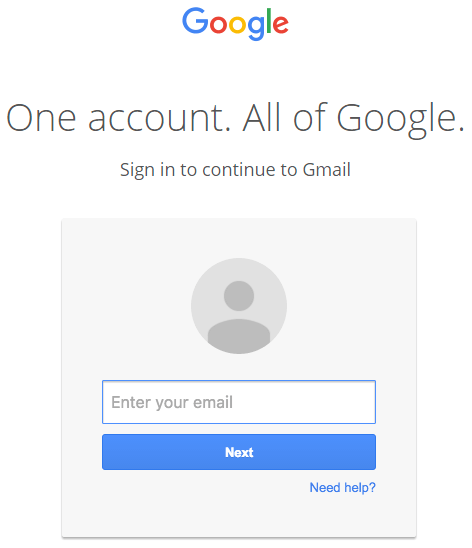
This attack is currently being used to target Gmail customers and is also targeting other services.The attacker will send an email to your Gmail account. That email may come from someone you know who has had their account hacked using this technique. It may also include something that looks like an image of an attachment you recognize from the sender.You click on the image, expecting Gmail to give you a preview of the attachment. Instead, a new tab opens up and you are prompted by Gmail to sign in again. You glance at the location bar and you see accounts.google.com in there. It looks like this….

You go ahead and sign in on a fully functional sign-in page that looks like this:

GMail data URI phishing sign-in page

Your account has been compromised once you complete sign-in.

Google Has Been Told To Hand Over Their Foriegn Emails

careersuit7_001


For Those out there with the luxury of privacy, well Google has been told to hand over  emails stored outside the country in order to comply with an FBI search warrant.  U.S. Magistrate Judge Thomas Rueter ruled on Friday that the act of transferring emails from a foreign server did not qualify as a seizure.

The judge ruled there is no “meaningful interference” with the account holder’s “possessory interest”, going on to assert that any privacy infringement occurs “at the time of disclosure in the United States”, rather than when the data itself is transferred.

Rule 41

They Say It Was Weiner’s (Laptop)Metadata

gold7_001


  • FBI officials knew in early October that Anthony Weiner’s laptop contained emails that were sent to or received from Hillary Clinton’s secret server 
  • However, agency head James Comey wasn’t informed of this development until Thursday, writing a letter to congress Friday that the emails existed
  • Republicans, including Donald Trump, pounced on this news suggesting the FBI must have found a smoking gun in the new email trove 
  • Democrats have pushed back suggesting it was inappropriate for Comey to write to congress without knowing what the messages contained 
  • Senate Minority Leader Harry Reid today said he believed Comey may have violated the Hatch Act 
  • What the FBI officials used to make their determination that Clinton emails were on the laptop was the metadata 

Read About It here

More Here

Yahoo Admitted 500 MillionAccounts Hacked: However, This Is News To Verizon

gold6_001

Yahoo admitted that back in 2014 there was a theft of 500 million accounts. However, Verizon who recently acquired Yahoo in July for $4.83 billion has not finalized the acquisition and says this is news to them, they’re just learning about this.

Google & Unencrypted Emails

business suit2_001

Google has a pair of new security features that will warn users when they should be cautious about revealing sensitive information over email.

Users will be shown a small red unlocked padlock icon in the upper right-hand corner of a message to let them know that someone they’re sending messages to or receiving email from doesn’t support TLS encryption that would keep information from prying eyes in transit. The majority of email that users see on a regular basis likely won’t contain one of these warnings, as most major email providers like Microsoft and Yahoo already support TLS encryption.


Gmail’s Undo Send Feature


Snapshotpingreen9_001Snapshotpingreen8_001

Gmail has a undo sent mail feature

Gmail’s Undo Send Instructions Here

Google Patents A Toy that They Say Is Evil

Snapshotmemorial day2015_002

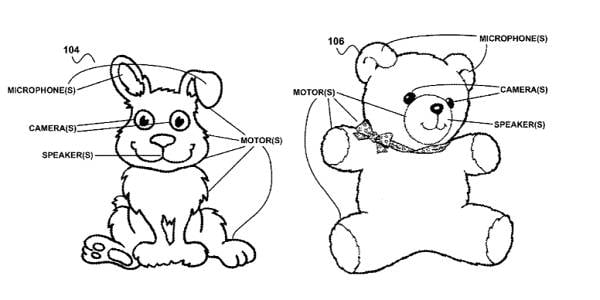
Google’s patent describes a toy that will look at and talk to your kids, then update a remote media device, depending upon the child’s feedback.The inventor of the evil robot is named as Richard Wayne DeVaul, whose job title is “director of rapid evaluation and mad science” at Google X. He works in a secret Google lab that may or may not be filled with roving robots, space elevators and talking refrigerators”. he also jumped ship from Apple to Google.

An anthropomorphic device, perhaps in the form factor of a doll or toy, may be configured to control one or more media devices. Upon reception or a detection of a social cue, such as movement and/or a spoken word or phrase, the anthropomorphic device may aim its gaze at the source of the social cue.

In response to receiving a voice command, the anthropomorphic device may interpret the voice command and map it to a media device command. Then, the anthropomorphic device may transmit the media device command to a media device, instructing the media device to change state.

The patent suggests other forms the demon dolly could assume in order to lure a child into a false sense of security, noting it could take the form of a dragon or an alien.

Young children might find this attractive. However, individuals of all ages may find interacting with these anthropomorphic devices to be more natural than interacting with traditional types of user interfaces.

A patent filed earlier this year has raised ridiculous concerns that Google may be building a robot army. These robots may be loaded with distinctive personalities, which alarmists claim are designed to raise the youth of humanity once Google’s AI destroys all adults.

Google has not responded to The Register‘s inquiry about the integration of these distinct areas of research at the time of publication.

More Here

How To Tell If Someone’s Been Snooping On Your Email Account

Snapshothalter7_001

Let’s take GMAIL for example. Log into your Gmail account from your computer’s Web browser. Once you get to your inbox screen, scroll to the bottom, and look for the link labelled “Details” in the lower-right corner. (Look closely)   Click the link, and you’ll get a pop-up window that shows the last 10 times someone accessed your Gmail account, along with how they accessed it (through a browser, an email app, and so on), their IP address, and when they access it. If something looks strange, you’ll want to change your password as soon as possible.

Syrian Electric Army Hacked CNN

Snapshotwinter5_001


Hacker aka “Th3 Pr0,” decided to hack CNN when saw something on Twitter he did ‘nt like.  A recent report that alleged Bashar al-Assad’s regime is guilty of “systematic torture and killing” of thousands of detainees. Th3 Pro and another  hacker of the Electric Syrian Army sent their first fake tweet from CNN’s official Twitter account. More fake tweets included @NatlSecurityCNN@CNNSitRoom and @CNNPolitics. as well as CNN’s official Facebook page.

It seems that hackers got control of  CNN’s social-media by relying on a wave of phishing emails to CNN employees. The emails were well written in good English and contained links that looked legitimate and appeared to come from real CNN email addresses. Researchers say the Syrian Electric Amy’s attack on CNN was highly effective, and that similar hacks will continue until employees learn to detect suspicious emails, avoid clicking on links without double-checking them first and never give up their credentials.

Google’s Gmail Will Read Your Private Messages

Snapshot_034

People sending email to any of Google’s 425 million Gmail users should not expect  that their communications are confidential, Google has said in a court filing.

Consumer Watchdog, the advocacy group that uncovered the filing, called the revelation a “stunning admission.” It comes as Google and its peers are under pressure to explain their role in the National Security Agency’s (NSA) mass surveillance of US citizens and foreign nationals.

John Simpson, Consumer Watchdog’s privacy project director. said “Google has finally admitted they don’t respect privacy, and people should take them at their word; if you care about your email correspondents’ privacy, don’t use Gmail.”

Google is attempting to dismiss a class action lawsuit that accuses the tech giant of breaking wire tap laws when it scans emails sent from non-Google accounts in order to target ads to Gmail users.

That suit, filed in May, claims Google “unlawfully opens up, reads, and acquires the content of people’s private email messages”. It quotes Eric Schmidt, Google’s executive chairman: “Google policy is to get right up to the creepy line and not cross it.”


Tag Cloud