Always Providing You With Ongoing Information

Posts tagged ‘Uber’

uber self driving testing california test
Sarah Abboud


California’s Department of Motor Vehicles issued Uber the permit on Wednesday, February 5. The permit was issued to Uber Advanced Technologies Group (ATG), which is tasked with developing successful and safe self-driving technology for the company. 

Uber told Digital Trends that the testing would start in San Francisco at a date yet to be determined but in the near future. 

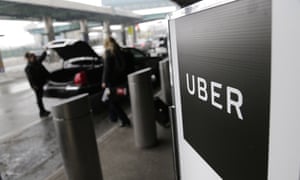
Uber Currently Piloting A Ride-Booking Kiosk @ Toronto Pearson International Airport In Canada


Snapshot41_187

Potential Riders can simply submit their name and phone number in the self-service kiosk. The company’s first-ever kiosk solution is designed to be more accessible for travelers with language or technological barriers, or who have difficulty using smartphones.

No USD 82 billion IPO? No airport presence? No problem. Even if your brand isn’t Uber-sized, there are still lessons from how it approached this kiosk:

Uber’s physical kiosk, for instance, is ideal for travelers who aren’t technologically fluent or those who’ve arrived without a local SIM!

Uber’s Apologizes For Customer Support Tweet Responding Using The N-Word

cand26_001

Uber apologized Monday after its automated Twitter account responded to a customer with the N-word. The Twitter user had adopted the racial slur as a username, which some believe might have been a deliberate move to trick the automated system.

The customer, whose Twitter handle was @realtheeCheney, messaged Uber about an unpleasant experience, tweeting “I had an awful driver today. I want my money back!!! Please respond so we can work this out.” Uber’s support account responded in a tweet with “We’re so sorry about that, (N-word)! Please send us a DM with your phone number with additional details of your concern so we can connect.”

With, this being the internet, a troll was involved in this sordid mess. Apparently responding to a customer complaint about a bad driver, the company replied that it was sorry, and then called the alleged customer a vile racist slur.

Bad.

Uber & Lyft Stop Hiring New York City Drivers

Snapshot24_002

Uber and Lyft have stopped accepting new drivers in New York City. The move comes after the city passed new rules that are designed to curb the explosive growth of ride-hail companies.

On its website, Uber attributes the new policy to “new [Taxi and Limousine Commission] regulations. There is a reference to legislation passed by the New York City Council in December 2018, which requires ride-hail companies to pay drivers at least $17.22 an hour after expenses. The pay formula uses a so-called “utilization rate,” which accounts for the share of time a driver spends with passengers in their vehicles compared to time spent idle and waiting for a fare.

The rules penalize companies for running too many cars without passengers on city streets. The higher a company’s utilization rate, the less it has to pay drivers to meet the new wage floor requirement. The rules were intended to increase pay for drivers, while also addressing what many saw as an oversaturated market in New York City.

Uber stopped onboarding new drivers in New York City on April 1st, followed soon after by Lyft. In January, Lyft sued the city to block the new wage rules, arguing that they would create an uneven playing field and would ultimately mean their own drivers would be paid less. Three weeks later, Uber sued the city over the cap on new ride-hail drivers.

Lyfte Goes Public While it’s Drivers Go On Strike

Image result for lyft

While Lyft celebrated, hundreds of Uber and Lyft drivers were on strike in protest of low wages and unsatisfactory working conditions . Drivers went on strike in San Francisco and San Diego as well, hoping to use the moment to shift the spotlight away from Lyft’s IPO (and Uber’s forthcoming public offering as well) to the more pressing concern about the future of ride-hailing.

Lyft’s employees are listed as contractors, lacking basic benefits like workers compensation, health insurance, and paid time off. They also can’t collectively bargain for higher wages or improved working conditions. 

The courts have largely agreed that their drivers don’t count as employees. New York City, drivers are on edge after a Lyft driver died by suicide over the weekend, the ninth for-hire driver in the city to take his own life since late 2017. The driver’s death came after Lyft sued the city over the implementation of rules that set a higher floor for hourly ride-hail driver wages.

Lyft lost $911 million last year, and warns it may never become profitable. “We have a history of net losses and we may not be able to achieve or maintain profitability in the future,” the company said in its filing with the Securities and Exchange Commission. Uber will likely say something similar in its filing; the company loses around $800 million a quarter.

Uber Has Teamed Up With teamed up with Penguin Random House imprint Puffin & National Literacy Trust For World Book Day, March 7

Image result for world book day

A number of children’s books will be available in select Uber cars for parents to take home in the UK. The cars will not appear differently on the company’s app, but it will instead be a surprise to both parents and non-parents alike who will find a selection of books in a basket in their vehicle. The trial will see 1,000 books distributed to the cars of participating drivers across London and Manchester. Passengers will be able to pick up books by Beatrix Potter, E.B. White and Vashti Harrison, among other authors.

Research conducted last month by Uber revealed that over 40 per cent of British parents admit that working schedules prevent them from reading a bedtime story with their children. One in five parents say they never have time to read to their children, a figure which rises to nearly a third in London.

IT professionals, hospitality workers, and those in the creative arts were among the most likely workers to fail to make it home for bedtime reading.

They’re Using Bus Service Like Uber Service In Canada

Snapshot35_001

The city of Belleville in Canada is piloting an on-demand, Uber-inspired system for its public buses. As a ‘transit desert’, Belleville has low population density – making it difficult to offer reliable, convenient public transport. Uber’s ubiquity has also contributed to this issue. Previously, the city’s dial-a-bus system required users to book at least 12 hours in advance. Under the new system this is reduced to 30 minutes. The city reported that the trial on a late night bus route has seen the number of riders doubled.


New York Plans To Cap Uber & Lyfte

Snapshotblue dress_001


New York City Council moved to impose a slate of new regulations on ride-hailing services. If Mayor Bill de Blasio signs off on the new legislation, New York would be the first city in the U.S. to cap the number of Uber and Lyft vehicles, as well as establish a minimum wage for drivers. It would also impose a new license requirement with more robust data-sharing requirements for the fiercely proprietary companies.

During the year-long cap on vehicle growth, the city would also conduct an impact study of the services. However, foes say it could lead to higher fares and more limited services. Ride-hailing has devastated the yellow cab industry, which is highly regulated in New York City compared to Uber and Lyft. Taxi medallions, once highly sought, have plummeted in value since TNCs came onto the scene, casting many drivers into financial ruin & death. A 2017 survey by the Independent Drivers Guild, which represents ride-hailing drivers, found that 57 percent of app based drivers bring in less than $50,000 annually, and 22 percent less than $30,000.

Uber Develop Patent To Detect Drunk Customers


Snapshotskirt5_001


Self Driving Uber Kills Woman

Image result for uber self driving car

A 49-year old pedestrian, who was struck while pushing her bike and later died from her injuries, was walking outside of the crosswalk, according to a Tempe police department statement.  The car was operating in self-driving mode, the police said, but a vehicle operator was behind the wheel at the time. The National Transportation Safety Board said on Twitter that it planned to open an investigation of the incident.

The Volvo XC90-based prototype was traveling at 38 mph in a 35 mph zone when it hit the pedestrian. The car made no attempt to brake or swerve. But while Uber’s prototype most likely isn’t to blame, the operator behind the wheel could ultimately face charges.

A report from the Governors Highway Safety Association released March 1 said Arizona had the highest rate of pedestrian fatalities in the nation, based on available data from 2017.

The complete Tempe Police Department statement:

The vehicle was traveling northbound just south of Curry Rd. when a female walking outside of the crosswalk crossed the road from west to east when she was struck by the Uber vehicle. She was transported to a local area hospital where she passed away from her injuries. Her next of kin has not been notified yet so her name is not being released at this time. Uber is assisting and this is still an active investigation.

After costs Uber & Lyfte Drivers Average 4$ An Hour

cand26_001

A research paper from MIT’s Center for Energy and Environmental Policy Research compared a survey of over 1,100 drivers for Uber and Lyft with “detailed vehicle cost information” and found that 30 percent of the workforce is actually paying to work after vehicle expenses are taken into account. Overall, their findings reveal a bleak picture: The median profit for drivers came out to just $3.37 per hour before taxes.

 The researchers used data from Edmunds, Kelly Blue Book, and the Environmental Protection Agency to determine the cost of insurance, maintenance, gas, and depreciation for various vehicle models. Cross-referenced with drivers’ self-reported revenue, mileage, and vehicle models, that information revealed discouraging results. Stephen Zoepf, a co-author of the paper, said “it’s quite possible that drivers don’t realize quite how much they are spending.” He said that many drivers are effectively borrowing money against the value of their cars and subsidizing the ridesharing companies by working for low wages. When you combine that subsidy with the billions of dollars in venture capital that these companies are losing each year, Zoepf concludes that “this business model is not currently sustainable.”

According to the working paper, 74 percent of drivers are earning less than the minimum wage in their states once these costs are included, with the average driver only pulling in $661 of profit per month. For those who are considering working for ride-hailing service, this data should make them cautious.

Those who already doing it should pay close attention to the paper’s finding that the median profit is 29 cents per mile. The researchers say that drivers could possibly take advantage of the standard mileage deduction that tops out at 54 cents per mile and declare a loss on their taxes. So while ride share services are losing billions of dollars, billions more dollars of driver income may be mistakenly getting taxed. Meanwhile, other recent studies have found these companies are just making traffic worse.

Uber responded to the Guardian with the following statement:

While the paper is certainly attention grabbing, its methodology and findings are deeply flawed. We’ve reached out to the paper’s authors to share our concerns and suggest ways we might work together to refine their approach.


It’s worth noting that other studies have reported higher hourly income using different methodologies.

A spokesperson for Lyft responded and said: “Drivers are an integral part of Lyft’s success. An ever-growing number of individuals around the country are using Lyft as a flexible way to earn income, and we will continue to engage with our driver community to help them succeed. We have not yet reviewed this study in detail, but an initial review shows some questionable assumptions.”

Last year, Uber settled claims by the Federal Trade Commission that it misled drivers about the potential income they would make. Gizmodo obtained a letter sent by Uber’s lawyers to the FTC where they argued that drivers were only earning less than the advertised rates because they chose not to drive enough.

Waymo v. Uber Reached A settlement

snapshot_139

Both sides in the Waymo v. Uber lawsuit have reached a settlement, and the case is being dismissed with prejudice. Judge Alsup granted the motion to dismiss, and with that, the case is, in his words, “ancient history.” 

 Waymo gets 0.34 percent of Uber’s equity at the company’s $72 billion valuation, which works out to a value of around $245 million. Waymo had originally sought a $1 billion settlement last year before the trial got underway, but Uber rejected that deal. Both sides are responsible for paying their own legal fees. “This is all equity; zero cash,” said a source familiar with the settlement. Meaning, Waymo is invested in Uber’s future.

According to a source, Uber cannot use any of Waymo’s hardware or software trade secrets as one of the conditions of the settlement. That’s interesting, especially since the trade secrets at the heart of the case were all related to hardware. Judge Alsup had instructed Waymo to bring a separate lawsuit against Uber if it wished to block the company from using its software.

Uber sees this as a big win, especially since it clears the deck for the company ahead of its expected public offering and avoids years of costly appeals and lastly, the settlement reflects the difference between Uber’s old and new leadership.

Waymo vs Uber Revolves Around Allegations of Deceit, Betrayal, espionage & A High-Tech Heist

Snapshotleather3_002

Waymo sued Uber, accusing it of ripping off key pieces of its self-driving car  technology in 2016. Uber paid $680 million for a startup run by Anthony Levandowski, one of the top engineers in a robotic vehicle project that Google began in 2009 and later became in Waymo.

Google was also an early investor in Uber, the relationship eventually soured. Its parent company Alphabet also owns Waymo.

Waymo has drawn a sordid picture, contending that Levandowski stole thousands of documents containing Google trade secrets before defecting to Uber. Waymo says Levandowski conspired with former Uber CEO Travis Kalanick to use the pilfered technology in Uber’s own fleet of self-driving cars.

Uber has boldly denied the allegations in the civil case, which has also triggered a criminal investigation by the U.S. Department of Justice. It’s not clear whether that probe is focused on Uber or Levandowski, who has consistently exercised his right against self-incrimination and is expected to do so again if called to testify during the trial.

Levandowski’s refusal to relinquish his Fifth Amendment rights eventually led Uber to fire him last May, even though he had developed a close relationship with Kalanick.

The stakes in the trial are humongous. Waymo is demanding damages estimated at nearly $2 billion. It also wants a court order that would prevent Uber from using any of the technology that it says was stolen, a move that could hobble the ride-hailing service’s push to design self-driving cars.

The courtroom drama will feature an intriguing cast of characters. The list of expected witnesses includes both the combative Kalanick and Silicon Valley venture capitalist Bill Gurley, an early Uber backer who later helped engineer Kalanick’s departure as Uber’s CEO. (Kalanick resigned under pressure last June.)

Two of the world’s richest people, Google co-founders Larry Page and Sergey Brin, may also be called to testify about the importance of Waymo’s self-driving project and Levandowski’s role in it.

Both Waymo and Uber each will have only have a total of 16 hours to make their case. That time restraint could prove more daunting for Waymo. It will have to educate a 10-person jury about the intricacies of the eight trade secrets that Uber is accused of stealing, then prove the ride-hailing service used the technology in its vehicles or improperly shared it with others.

The lawsuit has already established internal documents and sworn testimony that exposed spying programs and other shady tactics deployed by Uber to expand its business.

Furthermore, Uber has acknowledged allowing rampant sexual harassment to occur within its ranks, a yearlong cover-up of a major computer break-in and a $100,000 ransom paid to the hackers, and the use of duplicitous software to thwart government regulators.

U.S. District Judge William Alsup has emphasized that Waymo faces the difficult challenge of proving that the ride-hailing service used stolen technology in its self-driving cars.

 

Uber Accused Of Espionage, By Former Employee

https://kwos.com/wp-content/uploads/2017/01/uber-car.png

The judge in the $1.86 billion legal battle between ride-hailing giant Uber and Alphabet’s self-driving unit Waymo case, released a damning letter based on the account of a former Uber employee. The letter alleges that a special division within Uber was responsible for acts of corporate espionage, the theft of trade secrets, the bribery of foreign officials and various means of unlawful surveillance.

The company solicited undercover agents to collect intelligence against the taxi groups and local political figures. The agents took rides in local taxis, loitered around locations where taxi drivers congregated, and leveraged a local network of contacts with connections to police and regulatory authorities..

The “Jacobs letter” was written by the attorney for Richard Jacobs, who previously worked as Uber’s manager of global intelligence before being fired in April. The highly detailed account brings about accusations of systematic illegal activity inside Uber’s Strategic Services Group (SSG) which allegedly sought to surface other companies’ trade secrets through eavesdropping and data collection. The letter alleges that some of the information gathered was relayed to then-CEO Travis Kalanick.

The trial has been delayed until February 2018 to give the Waymo legal team more time to investigate claims Jacob’s claims.

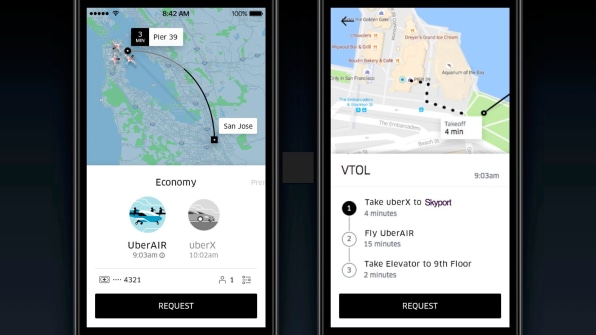
NASA Engineer Building Flying Cars For Uber

Uber brings in NASA engineer to build flying cars

Uber recently announced that NASA engineer Mark Moore will be spearheading its plans for an on-demand aviation service, known as Uber Elevate. Credit: Ube

To expand their ride-sharing services to the skies, Uber recently hired NASA aerospace engineer Mark D. Moore to spearhead Uber Elevate. For 30 years, Moore has worked for NASA, researching advanced aircraft and technologies and vertical take-off and landing (VTOL) applications. 

As skyscrapers allowed cities to use limited land more efficiently, urban air transportation will use three-dimensional airspace to alleviate transportation congestion on the ground. A network of small, electric aircraft that take off and land vertically (called VTOL aircraft for Vertical Take-off and Landing, and pronounced vee-tol), will enable rapid, reliable transportation between suburbs and cities and, ultimately, within cities.

Such a plan would not only rely on VTOL network to bypass the usual infrastructure of roads, railways, bridges and tunnels, but would also call for the repurposing of parts of the urban landscape. Uber’s plan calls for transforming the tops of parking garages, existing helipads, and unused land surrounding highway interchanges to create a network of “vertiports” and “versistops”, complete with charging stations for their vehicles.
.


Uber flying taxi rendering


Uber Gets Into The Credit Card Business

cornbraids7_001

Begining November 2, Uber will give users the option to get the card right in its app and will populate all of the information they have on file for their customers into the application. You also can apply for the card online.

After a few minutes, an applicant can get a verdict yes or no. The card is automatically available for use for Uber rides and UberEats purchases and a physical card will show up in the mail within a week or so.


A pickup point for Uber at LaGuardia airport in New York. Uber has faced criticism before over its treatment of drivers.

A pickup point for Uber at LaGuardia airport in New York. Uber has faced criticism before over its treatment of drivers. Photograph: Seth Wenig/AP

Uber to pay New York City drivers tens of millions of dollars after admitting to underpaying them for two-and-a-half years by taking a larger cut of drivers’ fares than it was entitled.

Under the terms of service the ride-hailing company put in place in November 2014, Uber was supposed to take its percentage of the commission – ranging between 20% and 25% – after deducting sales tax and a local fee to fund benefits for injured drivers. Instead, the company calculated its commission on the gross fare, resulting in more money for Uber and less for drivers.The average payout-per-driver will be about $900. With tens of thousands of drivers eligible for a refund, the company will be on the hook for tens of millions of dollars. An Uber spokesperson said that the company discovered the mistake in recent weeks, as it was preparing to roll out a new pricing scheme.

However, questions about Uber’s calculation of New York City commissions were raised nearly a year ago in a class-action lawsuit filed by the New York Taxi Workers Alliance (NYTWA). The suit, which was filed in federal court in New York in June 2016, alleged that Uber’s deduction of sales tax and the injured driver fee after the commission was calculated violated the terms of service and amounted to wage “theft”.

Uber also has admitted to underpaying US drivers. In March, the company paid refunds to UberBlack drivers in Philadelphia after charging them an extra 5% in commission for about 18 months. In January, Uber agreed to pay $20m to settle allegations by the Federal Trade Commission that it had tricked drivers with false promises of higher earnings.


.

Uber Now Working On Flying Taxis

Snapshot113_002

Helicopters, quad copters, or space-age airplanes, all the craft will have to be capable of vertical takeoff and landing, called VTOL, in order to fit into mini-airports, known as vertiports, spread around cities. And they will have to be quiet enough to take off and land near homes and offices without driving people crazy. Local, state, and federal agencies all have to get on board and convince the public that the technology is safe and not too intrusive.  Dubai has already green-lit a program by Chinese drone maker EHang (unconnected to Uber) that will start sky taxi flights in July.

The likely plan in all cities is to locate vertiports on top of buildings.

Uber’s taxis will start service with fully certified commercial pilots, who may be the company’s first full-time drivers.

Uber Announces Plan To Curb Bad Behavior By Passengers

Snapshotpurple3_002

Uber has announced updates to its app intended to curb bad behavior by passengers.Key among the changes is allowing passengers to see the ratings they receive from drivers — knowledge the company hopes will make customers more cognizant of the fact their behavior is being graded during every trip.

SAFR The Female Friendly UBER Alternative

Snapshotbluecoat7_001

Female-friendly alternative to Uber, Safr, launched last month in Boston.  With all the disturbing news concerning Uber and Lyft drivers the timing is just about right for Safr. A new report revealed that thousands of Uber and Lyft drivers in Massachusetts have failed the state’s new background checks,

Safr riders can choose which gender they feel most comfortable riding with via the app—drivers have the same gender preference option—and can also take advantage of a number of built-in safety features, including a feature that can call 911, send a text to a pre-assigned contact, or dial Safr’s 24-hour command center. A color-matching system, which sends riders and drivers a color-coded message during pickups, also helps ensure passengers get into the correct vehicle.

Safr advertisement

Safr , which are currently all women, go through a more extensive recruitment, vetting, and training process than competitors.

Safr isn’t the first such startup to gear their service toward women. In 2014, New York-based SheTaxis, also known as SheRiders, tried to launch, but faced gender discrimination issues and has since folded. See Jane Go, based in Orange County, California, and conceived of by a father-daughter team worried about rider safety, began operating last September.

Uber’s Tool Called Greyball

Snapshot8_001

Read About It Here

Google Suing Uber: Say Uber Stole From Them

Snapshotpink bag3_001

Waymo  a part of Alphabet, which owns Google — filed a lawsuit Thursday against Uber, alleging that the ride-sharing service stole some of its autonomous-car secrets.  Waymo claims a former employee may have stolen proprietary files — 14,000 of them, to be exact — and used them to start a new company, called Otto, the autonomous-driving tech startup acquired by Uber in August for $680 million. Otto demonstrated a self-driving semi truck late last year.  . The lawsuit alleges unfair competition, patent infringement, and trade secret misappropriation. It also claims the allegedly stolen technology earned Otto employees more than $500 million.

The lawsuit says Waymo noiced the issue when it was inadvertently copied in an email from a supplier that showed an Uber lidar circuit board, which bore a “striking resemblance” to one of Waymo’s designs. The complaint accuses former Waymo manager Anthony Levandowski of downloading the 14,000 files in question in December 2015. That allegedly included the lidar circuit board, part of a sensor that helps autonomous cars “see” their environment.
Levandowski left Waymo in January 2016 and formed Otto in May. The lawsuit alleges that, prior to his departure, he created a domain name for his new company, and told other Waymo employees that he planned to “replicate” the company’s technology for a competitor.


Google’s Waze

pinkfur-3_001


After a successful run in San Francisco, Google Waze is heading to other cities.The rollout will  have Waze  competing against the likes of ride-sharing giants Uber and Lyft, both of whom already offer carpooling options — UberPool and Lyft Line.

Waze’s system allows drivers to make up to two rides a day — for example, to and from work — and riders pay to cover the cost of gas, plus a little extra.

The downside? A Carpool user has to request a shared ride several hours ahead of time, and then hope someone responds. If no one does, you can always jump in an Uber or Lyft.

With both Uber and Google continuing to make progress with their respective autonomous cars, it may not be too long before empty cars are driving up to collect passengers, giving both companies additional options over the kind of transportation services they offer.

The Delete Uber Movement: How Did It Do?

purple-sweater2_002

Out of 40 million active users as of October  200,000 cancelled  according to the New York Times.


Tostitos Creates A Chip Bag That detects Alcohol On Your Breath

paisley6_001

In an effort to raise awareness for responsible driving, the chip maker has partnered with Mothers Against Drunk Driving and Uber to create “alcohol sensor bags,” special Tostitos bags that can tell if you’ve been drinking.

View

Study Reveal Uber Can Replace Taxis With less Cars

Snapshotcab_001

A new MIT study suggests that using carpooling options from companies like Uber and Lyft could reduce the number of vehicles on the road 75 percent without significantly impacting travel time.

The research team led by  Professor Daniela Rus of MIT’s Computer Science and Artificial Intelligence Laboratory (CSAIL), developed an algorithm that found that 3,000 four-passenger cars could serve 98 percent of taxi demand in New York City, with an average wait-time of only 2.7 minutes.

“Instead of transporting people one at a time, drivers could transport two to four people at once, results in fewer trips, in less time, to make the same amount of money,” says Rus, who wrote a related paper with former CSAIL postdoc Javier Alonso-Mora, assistant professor Samitha Samaranayake of Cornell University, PhD student Alex Wallar and MIT professor Emilio Frazzoli. “A system like this could allow drivers to work shorter shifts, while also creating less traffic, cleaner air and shorter, less stressful commutes.”

The MIT algorithm is more complex and improves over time, the study’s authors said. And despite the study’s conclusions, they say, it’s not meant to harm the taxi industry. In a phone interview, professor Daniela Rus of MIT’s Computer Science and Artificial Intelligence Laboratory (CSAIL) said the findings simply show a city’s transportation infrastructure could support fewer cars on the road at any given time.

According to their system, instead of working 12-hour shifts, you could work six- or eight-hour shifts. And you would make the same amount of money because it’s the same transportation need, it’s the same level of payment that flows through the system.

McDonalds Will Begin Deliveries In January in Florida Via Uber

afro4_001

Soon McDonald’s across Florida, delivery will be a new option to get your fast food. This is  a result of a new partnership between Uber Eats and the company and is initially planned for 200 stores in Miami, Orlando, and Tampa.

Customers will be able to order through the UberEats app or online starting next month. Like other restaurants available through UberEats, the company’s $5 delivery charge applies to any order.

The fast food chain already delivers through Postmates and DoorDash. However, the service and delivery fees for larger orders are more expensive than UberEats. McDonald’s is also planning to launch an order-by-app option, where customers can order and pay ahead of time, and pick up from a local store.More than two thirds of its business is from drive-thru sales, indicating that convenience is a key driver of its sales.

Uber & Lyft Driver In The Hot Seat For Racial Discrimination


Snapshotcab_001

Drivers for Uber Technologies Inc. in Boston canceled rides for men with black-sounding names more than twice as often as for other men. Black people in Seattle using Uber and Lyft Inc. faced notably longer wait times to get paired with drivers than white customers. The findings come from a study published on Monday by researchers at the Massachusetts Institute of Technology, Stanford University and the University of Washington.

Over the past few years, various writers have reported that transportation network companies (TNCs, aka ride-sourcing platforms typified by Uber and Lyft) help to mitigate this discrimination, making it easier for black travelers to get a ride. Also, female passengers were taken on longer, more expensive routes than male passengers.

In Seattle, the experiment revealed that African Americans waited up to 35 percent longer for a ride than their white peers. In Boston, the experiment revealed “more frequent cancellations against passengers when they used African American-sounding names,” the researchers said. Riders were dropped twice as often when they used African-American sounding names, compared to when the same people used white-sounding names.

In the case of ride-hailing apps, researchers similarly believe that names and photos are an issue. Such information gives drivers the means to discriminate against prospective riders. Uber doesn’t show customer photos to drivers. Lyft does, but passengers aren’t required to provide a headshot. Both San Francisco-based companies give riders’ names to their drivers.

screen-shot-2016-10-30-at-7-58-21-am


Uber Drivers Now Eligible For Unemployment Insurance

outfit4_001

More Here

Uber Using Artificial Intelligence Powered Selfie System

outfit11_001

Uber app will have drivers in several US cities to periodically upload selfies before they can begin their shifts. Uber will then use Microsoft’s cognitive-recognition AI to compare the uploaded images with the selfie the company already has on file for the driver.

If the two don’t match, Uber will temporarily suspend the driver’s account while it investigates. This is to prevent fraud.

Welcome To Uberville’sTransit System

Uber and Lyft have been striking agreements with transit agencies, mostly for so-called “first-last mile” programs — meant to shuttle commuters to bus or train stations. As of last year, Uber has scored public transit agreements with San Francisco, Atlanta, Philadelphia, Dallas, Cincinnati, and Pittsburgh, among other cities. Uber and Lyft have also been edging into public transportation services, like transit for disabled people or low-income residents who need rides to work or the grocery store. Last month officials in Washington, DC proposed having Uber respond to some 911 calls for ambulances.

Critics worry that if these programs succeed, they could pluck the affluent commuters who wield real political influence off trains and busses, leading to a crisis of declining ridership and decreasing clout for traditional public transportation.

The past year has seen a surge in public officials interested in giving the companies taxpayer dollars for public transit contracts. companies find it appealing especially in low-density communities like Altamonte where running traditional mass transit can be expensive.The pilot program is unusable for people without a smartphone, credit card, or a disability.

Uber CEO Travis Kalanick envisioned a future where increasing efficiency would make Uber cost-competitive not just with owning a car, but with traditional mass transit. When drivers drop off a customer only to pick up another, chained together in a “perpetual trip,” Kalanick said, “not only is it much less expensive than taking a cab or owning a car, it has the potential to be as affordable as taking a subway, or a bus, or other means of transportation. And that’s what we believe is the real game-changer. Those are the things we’ll be working on in years to come.

Uberville Spot white

Singapore’s Self driving Cars

Founded in 2013 by ex-MIT engineers, Nutonomy announced a $3.6m funding round in January, followed swiftly by $16m in funding in May from venture capitalists including Ford chairman Bill Ford and the Singapore government.

Like Uber and Google, Nutonomy is convinced that the real benefits of autonomous technology will be when humans never have to touch a steering wheel or brake pedal

Lookout Google-Uber Wants it’s Own Maps

Snapshothybrid3_001Uber is planning to invest half a billion dollars into creating its own worldwide maps.  This new investment will allow the company to build up tailor-made maps that would provide this level of detail. Uber needs maps with traffic patterns, locations of doors or other potential pickup locations. This new investment will allow the company to build up tailor-made maps that would provide this level of detail. The company has hired former Google employees such as McClendon, acquired mapping companies, and has forged partnerships with companies such as TomTom and DigitalGlobe.

Unicorns May Go Public In 2016

Snapshothalter7_001


Unicorn is also a term used to describe start-up companies that grow to valuations over $1 billion. Many of these companies get so big that they become public companies.

This year saw Shopify and Square had public offerings or IPO’s.  Uber has been very coy about going public. It continues to raise more money for its war chest and as a private company can indulge in testing other services without causing an uproar from shareholders. Airbnb has a $27 billion valuation and has been rumored to be going public since 2014. The chief executive officer and cofounder Brian Chesky says the company will only go public when it has a good reason. Pinterest has led the brand to a $15 billion valuation. Users stay on the site for almost 30 minutes at a time, making it a desired piece of Web real estate for promotional ads.

The Future Of Work & Digital Technology

business suit2_001

Approximately five years ago, machine learning could, with guidance from senior lawyers, effectively take over the time–intensive task of legal discovery, in which one party in a lawsuit combs through its documents to determine what it must show to the other side before trial. This job was traditionally done by junior lawyers, paralegals, increasingly-less expensive contract lawyers. Some said with dismay, that the change might be just the first step in the computerization of the law.

Economist Frank Levy, an MIT professor emeritus who, with Dana Remus, a professor at the University of North Carolina School of Law, are researching computers’ impact on the practice of law, explains “though machine learning does well with structured tasks like searching for relevant words, handling documents similar to others already identified, and even reconstructing simple summaries of a baseball game, it is far less adept at constructing something like a legal memo, where persuasiveness can rely on developing novel arguments”.

Levy, who co authored a book (with Harvard professor Richard Murnane) titled, The New Division of Labor,about how computers are changing employment and the job market, says”There’s much less structure in a legal memo, which is trying to figure out a strategic approach to an argument.”

It’s likely that work done by humans will increasingly involve innovative thinking, flexibility, creativity, and social skills, the things machines don’t do well. University of Oxford, researchers tried to quantify how likely jobs are to be computerized by evaluating how much creativity, social intelligence, and dexterity they involve. Choreographers, elementary school teachers, and psychiatric social workers are probably safe, according to that analysis, while telemarketers and tax preparers are more likely to be replaced. Most professions won’t go like that of the telemarketer, but the work involved is likely to migrate toward the tasks humans are uniquely skilled at, with automation taking over tasks that are rules-based and predictable.

Digital and mobile technologies are changing how and where we work, (at home or remotely), and who our competition is.Tianjin, China, there are riots where, taxi drivers are fighting the arrival of Uber and the bite it has taken out of their income. The people who drive for Uber are largely part-timers looking to make a little extra money. Uber customers in China take nearly one million rides a day, and management is investing more than $1.1 billion to expand into 100 more cities this year. The job of driving cars has not gone away, but the way that work is done is changing, and the transition is not painless.

Uber Takes Down ——-trip.uber.com

Snapshotblush4_001

Uber has taken down the searchable database people found at “trip.uber.com,” which contained details of trips people unknowingly made public by using the “Share your ETA” feature. That’s one of the app’s functions that sends a link with all pertinent details to chosen contacts. Since it could very useful, instead, Uber has decided to tweak the system so that all links get expired after 48 hours. The flaw was first discovered by ZDnet.

When searching “trip.uber.com” in Google, a list of past trips would appear in the search results.These trips are shared by the user from the mobile app, allowing others to track their current location, and other information associated with the ride — including the driver’s name, and car registration — from a single link. These trips go back as far as 2013, and include trips from the US, UK, Russia, Indonesia, India, and the Philippines — data and information that remains online and accessible even today.

Microsoft Giving Uber 100 Million $$$$$$$$

corporate office2_001

Microsoft has reportedly invested $100 million in Uber, this is a  $10 billion jump in the company’s valuation from its previous investment round late last year that had its valuation at roughly $40 billion. Microsoft’s major investment in the ride sharing app was finalized on Friday,Microsoft’s investment in Uber follows a high-profile deal in June in which Uber acquired Microsoft’s Bing Maps technology.

Google Launching A Car Pooling Service In Israel

flower dress_001

The service, RideWith, allows passengers to join fellow residents on their commutes. Google is expected to take a small 15% fee. Google is not competing with Uber, which has run afoul of protesters in places like France and South Africa, not to mention major American cities. Unlike Uber, Google limits trips to two per day, so drivers don’t make a living off of the RideWith service. Riders get a cheap trip, drivers make a bit of cash—at least enough to cover their expenses—and roads free up and become less congested, without thoroughly cannibalizing the professional driving industry (at least at first).


Taxi Apps

Snapshotdress3_001


Taxi apps and services like Uber and ZabKab in the U.S., are paving the way to making hailing a ride less of a hassle, but there are tons of regulatory hold ups;

The Chinese taxi apps let you bid on drivers, track the taxi that’s coming to you in real time, and use push to talk to say your current location and destination into your mobile and have drivers from various companies hear it.


Tag Cloud